If you’re in the market for an automated tool change (ATC) CNC wood lathe, you’ve probably encountered the term “spindle nose type” more than once—and if you haven’t, it’s one detail that can make or break your woodworking efficiency, precision, and long-term machine reliability. As a supplier of these machines, I’ve spent hundreds of hours walking woodworkers through this specific feature, and the number of folks who overlook it only to deal with costly setup delays or tool compatibility issues later is way higher than I’d like. Let’s break this down simply, no jargon overload, because this is one part of your CNC lathe that deserves clarity, especially when you’re relying on automated tool changes to keep production moving. ATC CNC Wood Lathe

First, let’s get the basics straight: the spindle nose is the flanged, external part of the machine’s spindle that holds cutting tools, chucks, fixtures, and any other components you mount to it. On a standard wood lathe, this is mostly a secondary consideration because you change tools manually; on an ATC CNC wood lathe, however, the tool changer arm or gripper has to align perfectly with the spindle nose to swap tools quickly—sometimes in under 10 seconds per change. That means the spindle nose type isn’t just a technical spec on a data sheet; it’s a core component that defines how well your ATC system works, how many tool options you have, and how consistent your cuts are, project after project.
When I talk to new customers, the first question they ask is, “Why does this even matter for woodworking?” Here’s the short answer: woodworking tools are a lot less standardized than metalworking tools. A machinist might reach for a standard ER collet or a specific quick-change tool holder, but woodturners use everything from roughing gouges and detail gouges to parting tools, bowl gouges, and face plates, all of which have different shank sizes and mounting requirements. If your spindle nose type doesn’t accommodate those tools, you either have to buy custom adapters (which add cost and delay) or settle for a smaller tool library, killing the whole point of investing in an ATC machine.
Now, the most common spindle nose type you’ll find on ATC CNC wood lathes, and the one we engineer into every machine we sell, is the CAMLOCK spindle nose. Wait, let’s not skip over what CAMLOCK actually stands for—though most folks just call it by the name now, it’s a quick-change, tapered flanged design that uses three or four locking screws to secure mounted components to the spindle. Let’s compare that to the other types you might hear about, so you understand why CAMLOCK is the right choice for woodworking ATC applications, rather than, say, a threaded spindle or a plain flange.
Threaded spindles used to be standard on manual wood lathes, right? You’d spin a face plate or chuck on the end of the spindle and tighten it by hand. But on an ATC CNC lathe, threaded spindles have a big flaw: they can loosen over time from vibration, and they require constant manual checking to make sure they’re tight enough. For automated tool changes, that’s a non-starter. If a tool slips mid-cut because the spindle isn’t secured, you’re looking at a ruined workpiece, damaged tool, and hours of downtime. Threaded designs also have a limited load capacity, so they don’t work well for heavy roughing cuts on large bowl blanks or thick turning stock—something most woodworking ATC users do every day.
Plain flange spindles are another option, where you bolt tools straight to a flat flange using multiple bolts. This works for manual setups, but for ATC, it’s a nightmare. The tool changer can’t align consistently every time if you have to adjust multiple bolts, and the process of swapping tools is way slower than the automated system is designed to handle. It’s also less precise: each time you mount a tool to a plain flange, there’s a tiny shift in alignment, which adds up to uneven cuts across a run of identical pieces. For custom woodworking or production shops making parts for furniture or decor, that inconsistency is a dealbreaker.
That brings us back to CAMLOCK, which solves every one of those problems for ATC CNC wood lathes. Let’s dive into the specifics of why it’s tailored to woodworking. First, CAMLOCK has a precision taper that centers any mounted tool or component perfectly on the spindle axis—no more alignment shifts between tool changes. That means every gouge, parting tool, or face plate is in exactly the same position, so your cuts are consistent across hundreds of workpieces. For woodturners, consistency isn’t just a quality thing; it’s a productivity thing. If you’re making 50 identical table legs, you don’t want to have to adjust your tool path every time you change a tool because it’s slightly off-center.
Another big win for CAMLOCK on ATC machines is speed. The locking mechanism works with the machine’s tool changer arm to swap tools in seconds, no manual adjustment needed. We’ve tested our ATC CNC wood lathes with CAMLOCK spindles cutting tool change times of 8 to 12 seconds, which is a massive improvement over manual tool changes that take 2 to 3 minutes each. For a shop running 8 hours a day, that adds up to several hours of extra production time per week—time you can use to take on more projects, not adjust tools.
But wait, not all CAMLOCK spindles are created equal, especially for woodworking. A common mistake I see new buyers make is assuming all CAMLOCKs are the same, but there are different sizes and configurations that fit different tool sets. For example, some CAMLOCK spindles are sized for metalworking tools (like 5C or 16C collets), which have smaller shanks and lower load capacities. For woodworking, we use a larger CAMLOCK profile that accommodates 1” and 1-1/4” tool shanks, which are the standard for most professional woodturning tools. That means you don’t have to buy adapters to fit your existing gouges and parting tools—you can plug them straight into the spindle without modifying anything, which saves you hundreds of dollars in accessory costs.
We also engineer our CAMLOCK spindles with a high-torque rating, another critical point for woodworking. Roughing out a large bowl blank can put 3 to 4 times the stress on a spindle than cutting small metal parts. A spindle with a low torque rating will flex under that load, leading to inaccurate cuts, tool wear, and even spindle damage over time. Our CAMLOCK spindles are made from heat-treated steel, with a tapered interface that distributes cutting force evenly across the spindle face, so you can run heavy roughing cuts all day without worrying about wear or flex.
Another feature we prioritize is the tool interface compatibility. ATC CNC wood lathes rely on standardized tool holders, and our CAMLOCK spindle works with both collet-style holders for small detail tools and solid-shank holders for heavy roughing gouges. This flexibility is key for woodworkers who do a mix of detailed turning and heavy stock removal. Some cheaper ATC lathes use a custom spindle nose that only works with their brand’s tool holders, forcing you to replace all your existing tools to use the machine. That’s a hidden cost that many buyers don’t account for upfront. We design our CAMLOCK spindles to be compatible with industry-standard woodworking tool holders, so you can use the tools you already own, no extra expense.
Let’s also talk about reliability, because downtime is the enemy for any woodworking shop. The CAMLOCK mechanism has very few moving parts, which means fewer things can break or wear out over time. We’ve had customers who’ve run our ATC lathes for 5 years or more with their original CAMLOCK spindle, only needing routine maintenance like lubrication, not replacement or repair. Compare that to a threaded spindle, which can strip over time from repeated loosening and tightening, or a plain flange that can warp if not bolted evenly, and you can see why CAMLOCK is built for long-term use.
Now, let’s address a common concern: “Is CAMLOCK too expensive?” I get this question all the time, especially from small woodworking shops or hobbyists who are used to manual lathes. The short answer is that the upfront cost of a CAMLOCK spindle is negligible compared to the total cost of owning a machine that doesn’t work for your needs. If you buy a cheaper ATC lathe with a less suitable spindle nose, you’ll either spend more on adapters, deal with inconsistent cuts, or have to replace the machine in a few years. Our ATC CNC wood lathes with CAMLOCK spindles are priced competitively, and the productivity gains alone make the spindle upgrade worth it for most users.
At the end of the day, choosing the right spindle nose type for your ATC CNC wood lathe isn’t about checking a technical box—it’s about investing in a machine that works for your specific woodworking needs. The CAMLOCK spindle isn’t just a spec on a data sheet; it’s the component that keeps your production moving, your cuts consistent, and your tools secure, project after project.
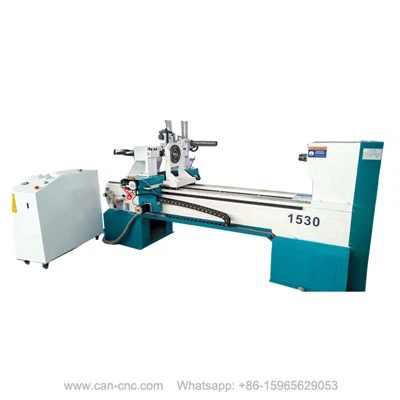
If you’re ready to explore ATC CNC wood lathes with the right spindle nose for your shop, we’re here to help. We can walk you through our machine specs, help you match the spindle configuration to your existing tools, and answer any questions about how our ATC systems work for your woodworking projects. Contact our team to discuss your needs, see our machines in action, and get all the details you need to make an informed decision.
Hobby CNC Router References
- Woodworking Machinery Technical Manual. Modern Woodworking Equipment Association, 2022.
- CNC Lathe Spindle Design and Application Guidelines. Industrial Press, 2021.
- ATC Woodturning Tool Compatibility Standards. Woodturners Society of America, 2023.
- High-Precision Spindle Technology for Woodworking Equipment. Journal of Wood Processing Machinery, vol. 35, no. 2, 2020, pp. 47-54.
Jinan APEX CNC Technology Co., Ltd.
Jinan APEX CNC Technology Co., Ltd. is one of the most professional atc cnc wood lathe manufacturers and suppliers in China, specialized in providing high quality products and service. Please feel free to buy high-grade atc cnc wood lathe for sale here from our factory. For more information, contact us now.
Address: YuanZhuang Industrial Park, Shizhong District, Jinan City, China
E-mail: info@apex-cnctech.com
WebSite: https://www.can-cnc.com/
