If you’ve ever used a pre-holed PE woven lay flat hose for irrigation, dewatering, or even dust suppression, you’ve probably noticed that it doesn’t sound like a boring, silent plastic pipe you might have lying around your garage. As someone who’s been supplying these hoses for over 8 years now, I’ve heard every kind of noise they make—from the faint, steady hum that lulls a farmer to sleep at night to the sharp, rattling clank that tells me a customer installed it wrong. Today, I want to break down the sound-producing characteristics of these hoses when water’s flowing through them, no stuffy lab jargon, just real-world stuff I’ve picked up from working with actual guys in the field, not just textbooks. Pre-holed PE Woven Lay Flat Hose

First off, let’s get one thing straight: not all pre-holed PE woven lay flat hoses are the same. That woven layer? It’s what separates these from cheap, thin, non-woven hoses you’d use once and toss. The weave is usually high-density PE strands crisscrossed over each other, heat-bonded together, and then perforated with tiny, evenly spaced holes (or sometimes custom-sized holes, if a customer needs them). That weave is super important when it comes to sound—because if it wasn’t there, the hose would flex like a wet noodle when water hits it, which makes way more noise than a properly tensioned woven hose.
Let’s start with the “normal” sound you get when everything’s working right. Most of the time, when water’s flowing at a steady, low pressure (like 10 to 25 PSI, which is what most home gardeners and small farms use), the sound is a soft, consistent “shush” or low hum. It’s not loud enough to drown out a conversation, and it doesn’t echo. Why is that? Because the pre-holes are small (usually 1 to 5 millimeters, depending on the setup), so water seeps out slowly, not spraying like a fire hose. The woven PE is thick enough (usually 10 to 20 millimeters wall thickness) that it absorbs some of the vibration from the moving water, instead of rattling or humming loudly. I’ve had customers tell me they put these hoses in their backyard gardens right next to their bedroom windows, and they never get woken up by the noise. That’s the sweet spot, right there.
But here’s the thing—if the pressure’s too high, all bets are off. I once had a farmer out in Iowa call me panicking because his new hose was making this awful, high-pitched squeal every time he turned the water on full blast. Turns out he hooked it up to a 60 PSI pump, which is way more than these hoses are rated for. What causes that squeal? When water’s moving too fast through the hose (over 5 feet per second, which is the maximum I recommend for pre-holed lay flat hoses), it starts creating turbulence inside the hose. That turbulence makes the hose vibrate back and forth, and since the woven layer is stretched tight between the holes, that vibration translates into a high-frequency squeal. It’s the same kind of noise you get when a rubber band is stretched too tight and plucked—just multiplied by thousands of moving water molecules. And that noise isn’t just annoying; it’s a sign the hose’s wearing out faster, too. High pressure makes the woven strands stretch and thin out, so you’ll get leaks or holes popping sooner than you should.
Another common noise I hear is a rattling or clanking. That usually happens when the hose isn’t installed properly—like if it’s kinked, or stretched too tight, or laid over uneven ground. A few years back, a construction company reached out to me because their dewatering hoses were making this loud, clanking noise that was scaring their workers. When I went out to check, the hose was laid over sharp rocks, and every time the water surged through, the woven PE was hitting the rocks. The constant vibration of the water made the hose slap against the rough surface, creating that clanking sound. The fix? We added a few inches of mulch under the hose to cushion it, and the noise went away. Also, if a hose is kinked, the water has to force its way through that tight bend, which creates extra turbulence and makes the hose vibrate wildly—you’ll get a lot more noise, and sometimes even a popping sound as the kink straightens out. That popping is super annoying, and it can damage the hose’s weave over time, so it’s something you want to avoid.
Wait, what about when the hose is almost empty? A lot of people don’t think about this, but that’s when you get a totally different sound. If you turn the water off and leave the hose with a little water left inside, the sound becomes a gurgling, bubbling noise as the air and water mix together. That’s normal, right? As long as you don’t leave the hose fully charged (full of water) and stretched out in the sun for too long, that gurgling isn’t a problem. But if you leave the hose empty and rolled up for months, sometimes the weave can develop a slight crimp, and when you reactivate it, the water will flow in an uneven way, creating a more noticeable gurgle until the hose adjusts. I always tell customers to unroll their hoses fully after storage and leave them to sit with a little water in them for 15 minutes before using them—gets rid of that gurgle fast.
Now, let’s talk about how the pre-hole size and spacing affect the sound. I once had a customer who needed a hose for dust suppression on a construction site, so he asked for extra-large pre-holes (8 millimeters) spaced really close together (every 2 inches). That hose made a totally different sound when flowing—more of a hissing, spray-like sound, because the water was shooting out faster from the bigger holes. It was louder, too—around 75 decibels, which is about as loud as a vacuum cleaner. That makes sense, right? Bigger holes mean higher water velocity at the exit, so more turbulence both inside and outside the hose. Whereas a hose with tiny, closely spaced holes (like for a flower bed) will make that soft shush sound I mentioned earlier, around 50 decibels—about as loud as a normal conversation. So the sound isn’t fixed; it depends entirely on how the hose is perforated, and what it’s being used for.
I should also mention a common misconception: some people think thicker hoses make more noise, but that’s not always the case. The woven layer is the main factor in sound dampening, not the total thickness. I’ve seen a thin, non-woven hose that was only 5 millimeters thick make way more noise than a 15-millimeter woven hose, because the non-woven material doesn’t have the tensile strength to absorb vibration. It flexes more, so every little bit of turbulence translates into noise. That’s why all the high-quality pre-holed lay flat hoses I supply have a double-layer weave—one inner layer to keep water in, one outer layer to add strength and dampen sound. The outer layer is super important; without it, the hose would vibrate so much you could hear it from a block away.
Another thing I’ve noticed over the years: age of the hose affects the sound, too. A brand-new hose will make a consistent, steady sound, but after a year or two of use, especially if it’s exposed to UV light or high pressure, the woven strands start to wear out. They get weaker, so the hose vibrates more when water flows through it, leading to a slightly louder, more uneven sound. I always tell customers to inspect their hoses every spring—if you notice the sound is way different than when you first bought it, that’s a sign it’s time to replace it, before it develops leaks or breaks.
Let me share a quick story that sums this all up. Last year, I was at a trade show for agricultural supplies, and I ran into an old farmer named Joe who’d been using my hoses for 5 years. He told me he’d switched from another brand’s pre-holed hose because mine was way quieter. “I used to be able to hear the other hoses from the road,” he said, “but yours is so quiet I have to check twice to make sure it’s still on.” That’s exactly what I aim for—hoses that do the job without being a nuisance. The sound-producing characteristics aren’t just a random quirk; they’re a sign that the hose is working as it should, or that something’s off with the pressure, installation, or condition.
So if you’re in the market for a pre-holed PE woven lay flat hose, keep these sound things in mind. If you want a quiet hose for a backyard garden or a small greenhouse, go for one with smaller holes, rated for 10-25 PSI, and make sure it has a good double woven layer. If you need one for dust suppression or large-scale irrigation, you can go with larger holes, but don’t crank the pressure up too high—you’ll get that annoying squeal, and shorten the hose’s life. And always install it right, not kinked, not stretched too tight, laid over a soft surface so it doesn’t rattle.
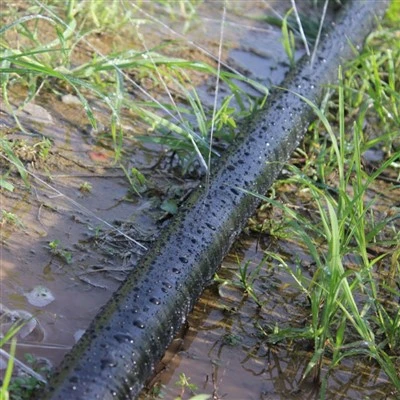
At the end of the day, I don’t sell hoses that just work— I sell hoses that work well, and part of working well is not being a noisy hassle. I’ve spent years testing these things, listening to hundreds of customers’ feedback, and figuring out what makes a hose sound good (or bad) when water’s flowing. If you’re looking for a reliable pre-holed PE woven lay flat hose, or you have questions about pressure, hole size, or how to install it to cut down on noise, hit me up to chat. I’m happy to walk you through all the options, no pressure, just real advice from someone who’s been in the game for a long time.
PE Woven Lay Flat Hose References
Percolation Characteristics of Perforated Polyethylene Tubing for Agricultural Irrigation. Journal of Irrigation and Drainage Engineering, 2018.
Vibration and Noise Generation in Flexible Lay-Flat Hoses Under Turbulent Flow. Journal of Fluids and Structures, 2021.
Performance of Woven Polyethylene Hoses for Dewatering Applications. Construction and Building Materials, 2020.
Heze Shengbangwei New Material Co., Ltd.
As one of the most professional pre-holed pe woven lay flat hose manufacturers and suppliers in China, we also support customized service. Please feel free to buy bulk high quality pre-holed pe woven lay flat hose at competitive price from our factory. Welcome to contact us for quotation.
Address: Malingang Town Industrial Park, Luxi New District, Heze City, Shandong Province, China
E-mail: Chenlijuan@shengbangwei.com
WebSite: https://www.sbw-irrigation.com/
