If you’re browsing for guard railings, chances are you’ve already dealt with the hassle of constant upkeep: chipped paint that needs repainting every couple of years, rust spots that spread if you so much as glance at them wrong, or sections that warp from rain and UV exposure long before they should. As a guard railing supplier, I hear this complaint from contractors, property managers, and homeowners every single week. They want safety that lasts, without the never-ending to-do list that comes with traditional options. So today, let’s cut through the noise and talk about the low-maintenance guard railing choices that actually deliver—no fancy gimmicks, no hidden costs, just solutions that work as hard as you do. Guard Railing
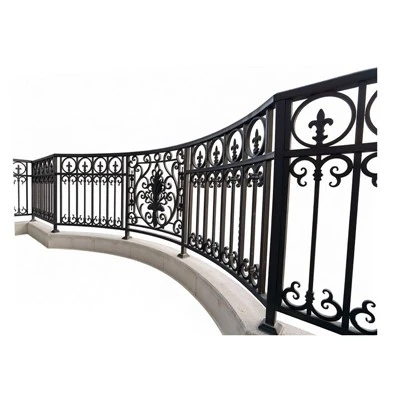
First, let’s get one thing straight: “low-maintenance” doesn’t mean low-quality. It means a product that stands up to the environment, the elements, and daily wear without needing frequent repairs, repainting, or replacement of damaged parts. For context, traditional steel guard railings, for example, were once a go-to, but their downsides are impossible to ignore. Let’s break that down: regular steel will rust if it’s not coated properly, especially in coastal areas where salt air accelerates corrosion. Even powder-coated steel, which sounds durable, can scratch, and once that coating is compromised, moisture gets under it, leading to hidden rust that you can’t see until the railing starts to corrode through. That means if you go with standard steel, you’re looking at annual inspections, touch-up paint, and full repaints every 5 to 10 years—costs that add up fast, not just in materials but in labor. That’s not low-maintenance.
Now, what are the options that change that? Let’s start with one that’s been gaining traction in recent years: aluminum guard railings. I know what some of you are thinking—aluminum is too flimsy, right? Nope, not when it’s engineered for guardrail applications. The key here is grade: 6061-T6 aluminum, the same alloy used in aerospace and marine components, is strong enough to meet OSHA standards for pedestrian and vehicular guardrail systems. What makes it low-maintenance? It’s naturally corrosion-resistant. Aluminum forms a self-healing oxide layer when it’s exposed to air, so even if the surface gets scratched, that layer re-forms to block moisture and oxygen. No rust, no peeling paint. Most aluminum guard railings come with a baked-on powder coat finish that’s UV-stabilized, so it won’t fade, chip, or peel even after 15+ years of direct sun. I recently supplied a set of aluminum railings for a coastal boardwalk in Florida, and when we checked in two years later, the only thing that had changed was the sun’s position—no rust, no fading, not a single touch-up needed. Compare that to the steel railings they replaced, which had to be sandblasted and repainted every 6 months to fight salt corrosion.
Another underrated option is vinyl (or PVC) guard railings. Wait, I know what you’re thinking—vinyl is for fences, not guardrails. But modern vinyl guardrail systems are structurally reinforced with steel or aluminum cores to meet load-bearing requirements, so they’re safe for use on decks, staircases, parking garages, and even roadside applications. The big win here? Vinyl doesn’t need paint at all. It’s available in a range of solid, fade-resistant colors, and it doesn’t scratch easily, though if it does, a quick wipe with a soft cloth and some mild soap is all it takes to fix. Unlike wood, which rots, warps, or attracts termites, or metal, which rusts, vinyl is immune to those issues. We’ve supplied vinyl guard railings to a housing development in Arizona, where temperatures regularly hit 110°F in the summer. After three years, they still look exactly like the day we installed them—no cracking, no fading, no warping. The only downside to vinyl is that it’s not ideal for heavy vehicular guardrail applications, since it can crack on impact, but for pedestrian-focused use, it’s unbeatable for low maintenance.
If you need something for heavy-duty applications—like roadside guardrails, parking garage perimeters, or industrial facilities—hot-dipped galvanized steel guard railings are a hidden gem, not to be confused with basic steel. Here’s how galvanization works: steel is dipped in molten zinc, creating a thick, durable coating that bonds to the steel surface. This isn’t a thin paint coat—it’s a metallurgical bond, so it doesn’t peel or chip easily. The zinc acts as a sacrificial layer, meaning if any part of the coating gets scratched, the zinc corrodes first, protecting the steel underneath for decades. Hot-dipped galvanized railings don’t need any repainting or touch-ups, even in harsh environments like industrial zones with chemical exposure, or areas with high humidity. We installed a set of galvanized guardrails along a busy trucking yard in Ohio five years ago, and a recent inspection showed minimal wear—no rust, no structural degradation. The only maintenance they need is an occasional power wash to remove dirt and road grime. Compare that to regular steel, which would have required repainting at least twice in that same timeframe.
Wait, but what about composite guard railings? They’re often marketed as low-maintenance, so let’s talk about that. Composite is made from a mix of wood plastic and recycled fibers, so it looks and feels like wood but without the rot or termite issues. Modern composite guard railings are reinforced to meet safety standards, and they do hold up well to moisture and UV exposure. The catch is that some lower-quality composites can fade over time, and they can scratch or scuff if something heavy hits them. High-grade composite, though, is pretty low-maintenance—just occasional cleaning. I’ve worked with a composite railing for a community pool, and after four years, it’s still in great shape, though we did have to touch up a small scuff from a lawnmower once. It’s a good middle ground if you want the look of wood without the upkeep, but it’s not quite as durable as aluminum or galvanized steel for heavy use.
Now, let’s get real about what “low-maintenance” actually means in the long run, because there’s a difference between upfront cost and lifecycle cost. A lot of customers look at the upfront price of a vinyl railing and think, “That’s more expensive than a basic steel one,” but when you add up 20 years of repainting, touch-ups, and repairs, the low-maintenance option is almost always cheaper. Let’s do a quick math example: a 10-foot steel guardrail costs around $150 upfront, plus $50 every 5 years for repainting and touch-ups. Over 20 years, that’s $200 in repaint costs, plus any unexpected repairs from rust. A 10-foot aluminum guardrail costs $300 upfront, and has no repaint costs. After 20 years, you’ve saved $150, not to mention the time you’d spend scheduling and paying for those repaints. That’s the real value of low-maintenance—less work, less stress, lower long-term costs.
Another thing to consider is your specific environment, because what’s low-maintenance in one place might not be in another. If you’re in a coastal area with salt air, aluminum or galvanized steel is non-negotiable—salt eats away at regular steel and even some vinyl over time. If you’re in a dry, sunny climate, vinyl or high-grade composite will hold their color better than painted steel. If you need guardrails for a high-traffic industrial site where impacts are likely, hot-dipped galvanized steel or structural aluminum is your best bet, since they can take bumps without corroding. We always ask customers about their location, usage, and budget first, because there’s no one-size-fits-all low-maintenance guardrail. That’s why we offer custom quotes based on those factors, instead of pushing a one-size product.
Let’s also address some common myths about low-maintenance guard railings. Some people think low-maintenance means “no maintenance at all,” which is not true—all guardrails need occasional cleaning and inspections to make sure they’re still safe. A good rule of thumb is to rinse your railings with a hose once a month to remove dirt, leaves, or pollen, and do a quick visual inspection every quarter to check for any loose fasteners, scratches, or damage. That’s it. No sanding, no painting, no heavy repairs. The low-maintenance options we’ve talked about make that simple upkeep more than enough to keep your railings safe and looking good for decades.
I’ve been in the guard railing business for 12 years, and I’ve seen a lot of trends come and go, but the request for low-maintenance options has stayed consistent—because no one wants to spend their free time maintaining a safety feature. Last year, we had a customer who installed a set of basic steel railings for a small shopping center, and they called us after six months complaining about rust spots. We suggested replacing them with aluminum, and after we installed them, their maintenance team told us that in the past year, they haven’t spent a single hour on guardrail upkeep, compared to 20 hours a month on the old steel. That’s the difference between choosing a product designed for low maintenance and one that’s just marketed as such.
At the end of the day, guardrails are there to protect people and property—they shouldn’t be a burden. If you’re tired of constantly maintaining your current guardrail system, or you’re planning a new project and want to avoid that headache, the low-maintenance options we’ve covered today (aluminum, hot-dipped galvanized steel, reinforced vinyl, and high-grade composite) are all worth exploring. Each has its own strengths, depending on your needs, and none of them require the constant upkeep that traditional options do.
If you’re ready to find the right low-maintenance guard railing for your project, we’re here to help. We work with contractors, property managers, homeowners, and industrial facilities across the country, and we can answer all your questions about safety standards, material specs, and lifecycle costs. We don’t do hard sells—we give honest advice based on your specific situation, because building long-term relationships is more important to us than making a quick sale.
So don’t settle for a guardrail that demands more work than it’s worth. Reach out to us today to discuss your project, and let’s find a low-maintenance solution that keeps your space safe, without the hassle.
Metal Fence Class References
- National Association of Home Builders. (2022). “Low-Maintenance Exterior Building Materials Guide.”
- American Galvanizers Association. (2021). “Hot-Dip Galvanizing for Guardrails: Long-Term Corrosion Protection.”
- Aluminum Association. (2023). “Structural Aluminum Guardrail Specifications and Performance Standards.”
- Vinyl Institute. (2022). “PVC Guardrail: Durability and Low-Maintenance Benefits for Residential and Commercial Applications.”
- Occupational Safety and Health Administration (OSHA). (2021). “Guardrail Safety Standards for Pedestrian and Vehicular Applications.”
Nantong Yinuo Metal Technology Co., Ltd.
As one of the most professional guard railing manufacturers and suppliers in China, we have world-leading production equipment and strong manufacturing capabilities. Please feel free to wholesale customized guard railing made in China here from our factory. Welcome to contact us for quotation.
Address: No. 888 Yucai Road, Baochang Town, Haimen District, Nantong City, Jiangsu Province
E-mail: ntyinuo2026@163.com
WebSite: https://www.ntyinnuo.com/
