As a well – established well furnace supplier, I’ve had countless inquiries over the years about the temperature range of well furnaces. It’s a topic that’s fundamental to understanding the capabilities and applications of these essential industrial devices. In this blog, I’ll delve into the intricacies of well furnace temperature ranges, exploring the factors that influence them and the various applications they serve. Well Furnace
Understanding Well Furnaces
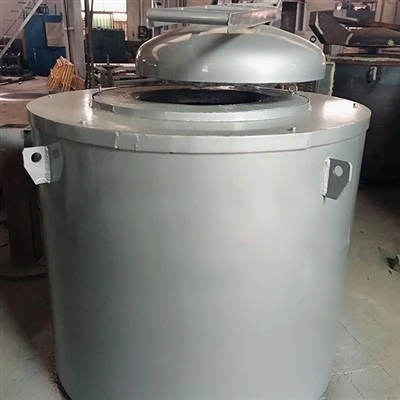
Well furnaces are vertical, cylindrical heating chambers designed for various heat – treatment processes. They operate on the principle of surrounding the workpiece completely, which ensures uniform heating and excellent temperature control. These furnaces are widely used in industries such as aerospace, automotive, metallurgy, and heat – treating shops because of their ability to provide consistent and precise heat.
Typical Temperature Ranges
The temperature range of a well furnace can vary significantly depending on its design, construction materials, and intended application. Generally, commercial well furnaces can be classified into three main temperature categories: low – temperature, medium – temperature, and high – temperature.
Low – Temperature Well Furnaces
Low – temperature well furnaces typically operate in the range of 100°C to 650°C (212°F to 1202°F). These furnaces are often used for processes such as stress relieving, annealing of non – ferrous metals like aluminum and copper, and pre – heating of workpieces before further processing. For example, in the production of aluminum castings, a low – temperature well furnace can be used to relieve internal stresses caused by the casting process. By heating the casting slowly to a specific temperature within this range and then cooling it gradually, the material’s brittleness is reduced, and its mechanical properties are improved.
The construction of low – temperature well furnaces usually involves using mild steel for the outer shell and insulation materials like mineral wool or ceramic fiber to minimize heat loss. The heating elements are often made of resistance wire, such as nickel – chromium alloy, which can provide stable heating at these relatively lower temperatures.
Medium – Temperature Well Furnaces
Medium – temperature well furnaces operate in the range of 650°C to 1000°C (1202°F to 1832°F). This temperature range is suitable for processes such as hardening, normalizing, and tempering of ferrous metals. For instance, in the automotive industry, medium – temperature well furnaces are used to heat steel components, such as gears and shafts, to a specific austenite temperature (usually within this range). After that, the components are quenched in a suitable medium, such as oil or water, to achieve the desired hardness.
To withstand the higher temperatures, the inner lining of medium – temperature well furnaces is often made of refractory bricks or castable refractory materials. These materials have excellent thermal insulation properties and can resist thermal shock. The heating elements are typically made of more heat – resistant alloys, such as high – nickel alloys, to ensure long – term stability and durability at medium – high temperatures.
High – Temperature Well Furnaces
High – temperature well furnaces are capable of reaching temperatures above 1000°C (1832°F), and some can even operate up to 1800°C (3272°F). These furnaces are used in extreme applications, such as melting and refining of high – melting – point metals like tungsten and molybdenum, and certain high – temperature heat – treatment processes for aerospace components.
In high – temperature well furnaces, advanced refractory materials such as carbon – carbon composites or graphite are used for the lining. These materials can withstand extremely high temperatures without significant degradation. The heating elements may be made of graphite, molybdenum disilicide, or tungsten, which can provide the necessary heat output at these elevated temperatures. However, operating at such high temperatures requires careful control and maintenance to prevent oxidation and other forms of material degradation.
Factors Influencing Temperature Range
Several factors influence the temperature range of a well furnace:
Heating Element Material
As mentioned earlier, the type of heating element used in a well furnace determines the maximum temperature it can reach. Different materials have different melting points and oxidation resistances. For example, nickel – chromium alloy heating elements are suitable for low – to medium – temperature applications, while graphite and molybdenum disilicide elements are necessary for high – temperature operation.
Insulation
The quality and type of insulation in a well furnace play a crucial role in maintaining the temperature range. Good insulation reduces heat loss to the surroundings, which allows the furnace to reach and maintain higher temperatures more efficiently. High – temperature insulation materials, such as ceramic fiber and refractory bricks, are used in well furnaces to minimize heat transfer.
Furnace Design
The design of the well furnace, including its size, shape, and the arrangement of heating elements, can affect the temperature range. A properly designed furnace ensures uniform heat distribution throughout the chamber, which is essential for achieving consistent heat – treatment results. For example, a well – designed furnace with multiple heating zones can provide better temperature control and allow for more complex heat – treatment processes.
Applications Based on Temperature Range
Low – Temperature Applications
In addition to stress relieving and annealing of non – ferrous metals, low – temperature well furnaces are used in food processing for pasteurization and in the plastics industry for pre – drying of polymers. Pasteurization is a process that involves heating food products to a specific low temperature for a certain period to kill harmful microorganisms while maintaining the food’s quality. In the plastics industry, pre – drying of polymers at low temperatures can remove moisture, which improves the quality of the final plastic products.
Medium – Temperature Applications
Medium – temperature well furnaces are widely used in the heat – treatment of steel components for various industries. In the tool – making industry, for example, medium – temperature heat – treatment processes are used to enhance the hardness and wear resistance of cutting tools. By heating the tool steel to a specific temperature within the medium – temperature range, followed by quenching and tempering, the tool can achieve the desired mechanical properties.
High – Temperature Applications
High – temperature well furnaces are essential in the production of advanced materials, such as superalloys used in jet engines and gas turbines. These superalloys require high – temperature processing to achieve their unique combination of strength, corrosion resistance, and heat resistance. The high – temperature environment of a well furnace allows for the precise control of the alloy’s microstructure, which is critical for its performance in extreme operating conditions.
Choosing the Right Well Furnace for Your Needs
When selecting a well furnace, it’s crucial to consider your specific temperature requirements. You need to determine the maximum and minimum temperatures needed for your heat – treatment processes. Additionally, factors such as the size of the workpieces, the required heating rate, and the production volume should also be taken into account.
As a well furnace supplier, I have extensive experience in helping customers choose the right furnace for their applications. I can provide detailed information about different furnace models, their temperature ranges, and their technical specifications. Whether you need a low – temperature well furnace for a small – scale production or a high – temperature well furnace for a large – scale industrial application, I can offer customized solutions.
Well Furnace If you’re in the market for a well furnace, I encourage you to reach out to me to discuss your specific needs. We can have a detailed conversation about your heat – treatment requirements, and I’ll work closely with you to find the most suitable well furnace for your business. Investing in the right well furnace is a significant decision, and I’m here to ensure that you make an informed choice.
References
- ASM Handbook Volume 4: Heat Treating. ASM International.
- Perry’s Chemical Engineers’ Handbook. McGraw – Hill Education.
- Modern Heat Treating and Surface Engineering. Elsevier.
Danyang Dingfeng Industrial Furnace Co., Ltd.
Danyang Dingfeng Industrial Furnace Co., Ltd. is one of the most experienced well furnace manufacturers and suppliers in China, also supports customized service with low price. Please feel free to wholesale high quality well furnace made in China here from our factory. For pricelist, contact us now.
Address: Lizhuang Economic Development Zone, Danyang City
E-mail: saleszk@dffurnace.com
WebSite: https://www.dffurnace.com/
