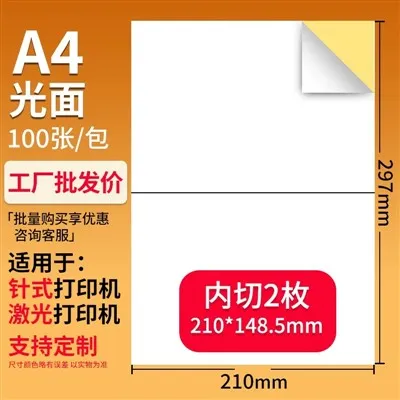
As a supplier of self-adhesive printing paper, one of the questions I’m frequently asked by customers is, "How long does it take for the ink to dry on self-adhesive printing paper?" This seemingly simple question has a rather complex answer, as it depends on several factors. In this blog, I’ll delve into these factors and provide a comprehensive understanding of the ink drying time on self-adhesive printing paper. Self-adhesive Printing Paper
The Basics of Ink Drying on Self-Adhesive Printing Paper
Before we discuss the drying time, it’s essential to understand the basic principle of ink drying. Ink drying is a process that involves the evaporation of solvents, absorption into the paper, and chemical curing. For self-adhesive printing paper, the drying process can be influenced by the type of ink, the printing method, the paper’s properties, and the environmental conditions.
Factors Affecting Ink Drying Time
1. Type of Ink
- Water-Based Inks: Water-based inks are environmentally friendly and commonly used in various printing applications. They dry primarily through evaporation. The water in the ink needs to evaporate for the ink to set on the paper. Generally, water-based inks can take anywhere from a few seconds to several minutes to dry, depending on the thickness of the ink layer and the environmental conditions.
- Solvent-Based Inks: Solvent-based inks contain volatile organic compounds (VOCs) that evaporate quickly, allowing the ink to dry relatively fast. However, they are less environmentally friendly compared to water-based inks. Solvent-based inks can dry within seconds to a minute on self-adhesive printing paper, especially under high air circulation or with the help of a heat source.
- UV-Curable Inks: UV-curable inks are cured by exposure to ultraviolet light. Once the ink is exposed to UV light, a chemical reaction occurs, causing the ink to dry almost instantaneously. This makes UV-curable inks a popular choice for high-speed printing applications where quick drying is essential.
2. Printing Method
- Digital Printing: Digital printing, such as inkjet and laser printing, applies ink directly onto the paper. Inkjet printers use water-based or pigment inks, and the drying time can vary depending on the ink type and the printer settings. Laser printers use toner, which is fused onto the paper using heat, resulting in relatively fast drying times, usually within seconds.
- Flexographic Printing: Flexographic printing is a common method for printing on self-adhesive labels. It uses flexographic plates to transfer ink onto the paper. The drying time for flexographic printing depends on the type of ink used, but it typically ranges from a few seconds to a few minutes, especially when using solvent-based or water-based inks.
- Offset Printing: Offset printing involves transferring ink from a plate to a rubber blanket and then to the paper. The drying time for offset printing can be longer compared to some other printing methods, especially when using dampening solutions. It can take several minutes to hours for the ink to dry completely, depending on the ink type and paper absorbency.
3. Paper Properties
- Porosity: The porosity of the self-adhesive printing paper plays a crucial role in ink drying. A more porous paper allows the ink to absorb into the paper fibers more quickly, reducing the drying time. On the other hand, a less porous paper may require more time for the ink to dry on the surface.
- Coating: Many self-adhesive printing papers are coated to improve print quality and durability. The type of coating can affect the ink drying time. For example, a glossy coating may slow down the drying process as it can prevent the ink from being absorbed into the paper. Matte coatings, on the other hand, may allow for faster ink absorption and drying.
4. Environmental Conditions
- Temperature: Higher temperatures generally accelerate the ink drying process, as they increase the rate of solvent evaporation. In a warm environment, the ink can dry more quickly compared to a cold environment. However, extremely high temperatures can also cause problems such as ink bleeding or paper warping.
- Humidity: High humidity can slow down the ink drying process, as it reduces the rate of evaporation. In a humid environment, the water or solvents in the ink have a harder time evaporating, resulting in longer drying times. Conversely, low humidity can speed up the drying process but may also lead to issues such as static electricity and paper brittleness.
- Air Circulation: Good air circulation helps to remove the evaporated solvent or water from the vicinity of the printed paper, promoting faster ink drying. Using fans or ventilation systems can significantly reduce the drying time, especially for water-based and solvent-based inks.
Real-World Examples of Ink Drying Times
- Water-Based Inkjet Printing: When using water-based inks in an inkjet printer on standard self-adhesive printing paper with a normal porosity, the ink may take about 10 to 30 seconds to dry on the surface. However, it may take several minutes to fully dry and become smudge-proof, especially if a thick layer of ink has been applied.
- Solvent-Based Flexographic Printing: In a flexographic printing setup using solvent-based inks, the ink can dry within a few seconds to a minute under normal production conditions with proper ventilation. If additional heat sources are used, the drying time can be further reduced.
- UV-Curable Digital Printing: As mentioned earlier, UV-curable inks dry almost instantaneously when exposed to UV light. This allows for high-speed printing and immediate handling of the printed self-adhesive labels or paper.
Tips to Accelerate Ink Drying
- Adjust the Printer Settings: Some printers allow you to adjust the print speed, ink density, and drying settings. Reducing the print speed and ink density can help the ink dry faster. Additionally, using the printer’s built-in drying function, if available, can significantly reduce the drying time.
- Control the Environment: Maintain a suitable temperature and humidity level in the printing area. A temperature of around 20-25°C (68-77°F) and a relative humidity of 40-60% is generally ideal for ink drying. Use fans or ventilation systems to ensure good air circulation.
- Choose the Right Paper and Ink Combination: Select a self-adhesive printing paper with the appropriate porosity and coating for the type of ink you are using. Consult with your paper supplier to find the best combination for your printing needs.
Conclusion
In conclusion, the time it takes for the ink to dry on self-adhesive printing paper is influenced by multiple factors, including the type of ink, printing method, paper properties, and environmental conditions. By understanding these factors and taking appropriate measures, you can optimize the ink drying process and ensure high-quality printing results.
Self-adhesive Labels If you are in need of self-adhesive printing paper for your business or projects, I would be more than happy to assist you. We offer a wide range of high-quality self-adhesive printing papers that are suitable for various printing applications. Whether you’re printing labels, stickers, or other promotional materials, our papers can provide excellent print quality and reliable performance. Feel free to contact me to discuss your specific requirements and explore how our products can meet your needs.
References
- Smith, J. (2020). Printing Technologies: A Comprehensive Guide. Printing Press.
- Johnson, R. (2019). Ink Drying Mechanisms and Factors Affecting Drying Time. Journal of Printing Science.
- Brown, A. (2018). The Impact of Paper Properties on Ink Drying. Paper and Packaging Research Institute.
Nanjing Green Label Printing Co., Ltd.
We are one of the most professional self-adhesive printing paper manufacturers and suppliers in China, also support customized service. We warmly welcome you to wholesale high quality self-adhesive printing paper at competitive price from our factory. For pricelist and quotation, contact us now.
Address: No. 116-3 Suyuan Avenue, Jiangning District, Nanjing
E-mail: greenlabel@126.com
WebSite: https://www.chinalabelprint.com/
