Hey there, if you’ve ever stopped to watch a rubber welding hose in action—whether it’s on a construction site feeding a cutting torch, in a fabrication shop powering a MIG welder, or even on a small DIY job at home—you’ve probably wondered one common thing: “How much fluid or gas can this thing actually move?” As a rubber welding hose supplier, I get this question every single week, and honestly? It’s way more nuanced than just giving a random number. Let’s break this down like I’m chatting with you over a coffee (or a tool shed break—no judgment either way) because that’s how I roll, not some stiff industry manual. Rubber Welding Hose
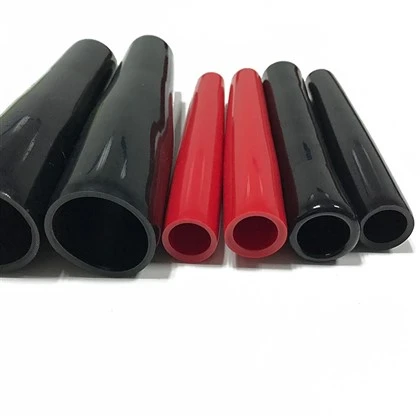
First, let’s cut through the “rubber welding hose” label because people mix this up all the time. This isn’t the flimsy garden hose you drag to the backyard. We’re talking about specialty hose built for welding systems—think compressed acetylene, oxygen, maybe even inert gases like argon for TIG welding, or sometimes even water for cooling heavy-duty welding torches. Each of these fluids has different properties, and that totally changes the maximum flow rate. No one-size-fits-all here, right?
Let’s start with the basics that actually matter for real-world use, not textbook stuff. The biggest factor? Hose inner diameter (ID). Duh—if you have a skinny straw vs. a big gulp cup, guess which moves more liquid faster. For rubber welding hoses, standard IDs you’ll see are ¼ inch, 5/16 inch, and ⅜ inch. Yeah, those sound tiny, but welding systems run at specific pressures, so size is everything. Next, material construction. I’m not talking about pretty colors—rubber welding hoses have inner liners (usually synthetic rubber like nitrile or neoprene) that resist abrasion and the specific gas you’re moving, plus reinforcement layers (nylon braid, steel wire, even a combination) that keep the hose from blowing out at high pressure. Oh, and the outer cover? Resists oil, chemicals, UV rays—super important for jobs outside. Then there’s working pressure. Most welding hoses are rated for 100 to 300 PSI, depending on the application. Higher pressure lets more flow, but you can’t just crank it all the way—hose specs have to match the regulator on your welder, or you’re gonna have a bad time.
Now, let’s get to the actual numbers—this is what everyone’s here for. Let’s use common welding gases because that’s 90% of what our customers ask about. Starting with oxygen, the go-to for most basic welding. For a ¼-inch ID rubber welding hose, at a standard working pressure of 50 PSI (that’s the sweet spot for most handheld torches), max flow rate is around 25 to 30 cubic feet per minute (CFM). Wait, hold on—5/16-inch ID? That jumps to 40 to 45 CFM. And ⅜-inch? We’re talking 60 to 65 CFM. That makes sense—wider hose = less friction loss, so more gas can move without slowing down. Now acetylene, which is what mixes with oxygen to make that super hot welding flame. Acetylene is a bit trickier because it’s a dissolved gas, and its flow rate is limited by safety specs too. For the same ¼-inch ID, 50 PSI working pressure? Max flow is 10 to 15 CFM. 5/16-inch gets you 20 to 25 CFM, and ⅜-inch is 30 to 35 CFM. Way lower than oxygen because acetylene is less dense, so you don’t need as much to get a good flame.
Wait, what about other gases? If you’re using argon for TIG welding or MIG shielding gas, that’s another common one. Argon is denser than acetylene, so flow rates are similar to oxygen. ¼-inch ID gets about 20 to 25 CFM, 5/16 is 35 to 40 CFM, ⅜ is 55 to 60 CFM. And if you’re using our cooling water hoses for heavy-duty welders? Those are a bit different. For ¼-inch ID water-carrying rubber welding hose, max flow rate is around 2 to 3 gallons per minute (GPM) at 30 PSI. ⅜-inch is 4 to 5 GPM, and if you need extra heavy cooling for industrial welders, we do ½-inch ID hoses that hit 8 to 10 GPM. That’s the kind of stuff that keeps torches from overheating during a long shift.
But here’s the part most people don’t know: those numbers I just gave? They’re theoretical maximums. In the real world, you never hit those. Why? Friction loss, for one. If your hose is 50 feet long instead of 10 feet, that extra length causes the gas to slow down, so flow rate drops. Also, if you have a bunch of sharp bends, kinks, or undersized fittings at the ends, that creates backpressure and cuts flow. Plus, safety standards. We can’t sell a hose rated for a “max flow” that’s actually dangerous—too much flow can cause flashbacks, or put unnecessary stress on the hose leading to leaks or bursts. That’s why we always specify flow rates at standard conditions (usually 70°F, sea level, no extra bends) because real jobs are messy.
Let me give you a quick example to make this concrete. Say a fabricator is building a steel frame, using a handheld oxy-acetylene torch. They need a steady flame, not a sputtering one. If they use a ¼-inch ID rubber welding hose, that’s fine for small projects, but if they’re cutting 1-inch steel all day, they’ll need a ⅜-inch hose to get enough acetylene and oxygen to keep the torch running smooth—no stopping to adjust pressure every five minutes. Another example: a TIG welder doing custom aluminum work. They need argon shielding to prevent the weld from oxidizing, so a 5/16-inch hose is perfect—enough flow to cover the weld pool without wasting gas, which saves them money on supplies.
As a rubber welding hose supplier, I’ve seen customers make the same mistake over and over: buying the cheapest, smallest hose they can find because they think it’ll work. But then they end up with slow flow, uneven flames, or even hoses that crack after a week. That’s why we always ask two questions first: what gas are you using, and how long is the hose run? That way we can get them the right size, so they don’t waste time or money. Oh, and don’t forget about hose type—we have “Grade R” for regular welding, “Grade T” for torch cutting, and “Grade W” for water cooling, each with their own flow specs tailored to the job.
Wait, one more thing I should mention: pressure vs. flow rate. It’s not a straight line. If you double the pressure, you don’t double the flow—because friction loss goes up with pressure too. For example, a 5/16-inch oxygen hose at 40 PSI is 35 CFM, at 60 PSI it’s 48 CFM, not 70 CFM. That’s why we test every hose batch in our shop before we send it out—we measure flow at different pressures to make sure it meets our specs and is safe for the job. I’ve been in this industry for 12 years (yep, that’s a lot of hose!) and I still test every new batch myself, because numbers on a sheet don’t mean squat if the actual hose doesn’t deliver.
Let’s wrap this up because I know you’ve got another job to get to. The maximum flow rate of a rubber welding hose isn’t a single number—it depends on inner diameter, gas type, length, pressure, and construction. For oxy-acetylene, you’re looking at 10 to 65 CFM depending on size, argon is similar to oxygen, and cooling water hoses hit 2 to 10 GPM. But those are top-end numbers—your actual flow will be lower based on real-world conditions.
If you’re trying to figure out what hose you need for your welding setup, don’t guess. Hit me up to chat about it. I’ll ask you the basics, give you straight answers, no sales pitch fluff, and help you pick the right hose so your work runs smoother, safer, and you don’t have to replace it every other month. No hidden fees, no weird fine print—just good, honest advice from a rubber welding hose supplier who’s actually used every product we sell on job sites.
30 Degree Silicone Hose References:
- Compressed Gas Association. (2021). Standard for Welding, Cutting, and Allied Processes (ANSI/CGA G-1).
- Rubber Manufacturers Association. (2022). Specification for Rubber Hose for Welding Applications (RMA G201).
- OSHA. (2020). Safety Standards for Welding, Cutting, and Brazing (29 CFR 1910.252).
- Engineering Toolbox. (2023). Fluid Flow Rate in Pipes: Friction Loss and Velocity Calculations.
Ningbo Haidu Auto Parts Co., Ltd.
As one of the most professional rubber welding hose manufacturers and suppliers in China, we’re featured by cheap products and good service. Please rest assured to buy durable rubber welding hose at competitive price from our factory. Also, OEM service is available.
Address:
E-mail: Sale6@sterlingautoparts.com
WebSite: https://www.cnsiliconehose.com/
