Hey everyone, it’s Jake here from the team that makes those no-fuss, stainless steel kitchen hoods you’ve probably seen popping up in cozy cafes, small family restaurants, and even home cooks’ dream kitchens. Lately, I’ve been getting so many messages from folks asking the same thing: “Jake, how do I know if this ‘simple’ stainless steel hood I’m eyeing is actually powerful enough for my space?” I get it—when you’re not a commercial kitchen tech (or even a home cook who only has a stovetop and a few burners to fuss with), all the specs and numbers for hood power can feel like reading a foreign instruction manual. No jargon, I promise—we’re gonna break this down like we’re shooting the breeze over a coffee, and I’m gonna lean into what we’ve learned selling these hoods for years, plus some actual science that doesn’t require a PhD to understand. Simple Stainless Steel Kitchen Hood

First off, let’s get one thing straight: “powerful enough” isn’t just about how loud the fan sounds when it’s on full blast. I’ve seen guys at trade shows cranking a tiny, cheap hood to full speed and being shocked when it sounds like a jet engine taking off—turns out, noise doesn’t equal power. What actually moves the smoke, grease, and cooking odors out of your kitchen is air flow, measured in CFM. CFM = Cubic Feet per Minute. That’s how much air the hood can pull through it in 60 seconds. Simple. But wait—how do you figure out how much CFM you need, not just how much the hood claims to have?
Let’s start with the basics of your stovetop, because that’s where all the mess comes from. If you’re using a home gas stovetop (most small kitchens are), the rule of thumb I’ve always heard (and actually checked with our HVAC guys back at the warehouse) is you need about 100 CFM per linear foot of stovetop. Wait, let’s make that concrete. If you’ve got a 30-inch stovetop? Convert that to feet—30 inches is 2.5 feet. 2.5 x 100 = 250 CFM. That works for home stoves, right? But if you’re in a commercial space—say, a cafe with four burners cranking out burgers and stir-fry all day long—you gotta bump that up. For commercial gas stovetops, it’s more like 150 CFM per linear foot, because commercial burners pump way more heat, which means way more rising smoke and grease. Let’s say a 48-inch commercial stovetop: that’s 4 feet x 150 = 600 CFM. That makes sense, and we’ve sold hundreds of our stainless hoods with those exact numbers for cafes and small diners, and they haven’t had a single complaint about smoke lingering in the kitchen.
But hold up—there’s a catch here, and it’s one I’ve had customers miss all the time. That CFM number we just talked about? It’s the “free air CFM” rating, right? That’s the number the hood manufacturer puts on the box when it’s brand new, not installed, with nothing blocking the fan. But when you install a hood, it’s got a duct—usually 6-inch or 8-inch pipe going out through the wall or ceiling. And that duct creates “static pressure,” which basically means the fan has to work harder to push air through all that pipe, turns, and any filters you have. So the CFM will drop once it’s installed, which is why you can’t just go for the lowest CFM that meets the rule of thumb—you need to account for that drop.
Here’s the thing about our simple stainless steel hoods: we build ’em so the free air CFM they list only drops by about 10-15% once installed, even with a standard duct run. How? Because we don’t skimp on the fan motor—we use durable, quiet ones (not those rinky-dink ones that die after a year) that are sized to push enough air even when there’s a little resistance. I once had a customer who tried to save a buck by getting a way smaller hood, and when he installed it, his duct was longer than 10 feet and had two 90-degree turns. His installed CFM dropped so much that half the kitchen smelled like fried chicken for three days straight. He ended up swapping it for one of our 300 CFM models, and now he says the grease is gone before it even hits the walls. So the takeaway here: if your duct run is over 10 feet, or has more than two turns, add about 50 CFM to the number you calculated earlier. Easy fix.
Another big one: the size of the hood itself. Duh, right? If you’ve got a 30-inch stovetop, you can’t put a 24-inch hood over it and expect it to catch all the smoke. I see this all the time—people buy a hood that’s just slightly wider than the stovetop, but our guys in customer service get so many stories of people who tried to squeeze a hood that’s smaller and it just doesn’t cover the whole cooking surface. The hood needs to be at least as wide as your stovetop, and actually, a few inches wider on each side is better. That way, no matter where you’re cooking on the stovetop, the smoke has to go through the hood’s air intake, not around it. For our simple stainless hoods, we make sizes from 24 inches up to 60 inches, so no matter what size stovetop you have, we’ve got something that fits. No forcing a square peg into a round hole here.
Wait, what about electric stovetops? I get asked about this too, and it’s way simpler. Electric burners don’t put off nearly as much rising heat, so the rule of thumb can be lower—about 80 CFM per linear foot of stovetop. So a 30-inch electric stovetop would need 200 CFM, not 250. I have a buddy who does a lot of home cooking with a induction stovetop (super popular now, quiet, efficient) and he uses our 24-inch hood with 180 CFM, and he says it pulls even the smoke from seared steak right down, no smell in the rest of his apartment. That works too—induction is so cool that it doesn’t push a lot of air up, so even a smaller hood does the job.
Let’s talk about the real-world test, because numbers are great, but nothing beats actually seeing the hood do its job. If you’re in a space that’s already built, here’s a trick I learned from our installation techs: when you’re testing a hood, light a few candles and hold them under the hood at the back of the stovetop, the front, and the sides. If the smoke from the candles gets pulled straight down into the hood right away, that’s a good sign. If the smoke curls around the edges, lingers above the hood, or even drifts to the other side of the kitchen? The hood is too weak, or it’s not installed right (but that’s another problem). I did this test in a customer’s kitchen last month—they had a random hood they bought online that claimed 400 CFM, but when we lit the candles, half the smoke was drifting to the fridge. We swapped it for our 36-inch hood with 320 CFM, and now the candles’ smoke is gone in three seconds flat. That test never lies.
And let’s not forget filters. Our simple stainless hoods use baffle filters, not those flimsy mesh ones that clog up in a month. Baffle filters are better at catching grease, which means they don’t block the air flow as much, so the hood stays powerful longer. If you’ve got a hood with mesh filters, after a few months of use, the grease clogs the holes so bad that the CFM drops by 30% or more. So not only do our filters make the hood last longer, they keep the power consistent over time. That’s a big one—you don’t want to buy a hood that works great for a week and then dies because the filters are clogged.
Wait, what about height? How high the hood is mounted above the stovetop matters too, right? Yeah, and a lot of people get this wrong. For gas stovetops, the hood should be 24 to 30 inches above the burners. For electric or induction, it can be a little higher—27 to 36 inches. If you mount it too high, the smoke has to travel farther to get to the hood, so it might not pull it all. If you mount it too low, you’ll bump your head every time you stand up, and it’s a fire hazard too. So that’s another thing to factor in—if your ceiling is really high, you might need a slightly more powerful hood to pull smoke from a little higher up. We’ve got customers with 10-foot ceilings in their home kitchens, and they go for a hood with a little extra CFM, and it works perfect.
Let me give you a real example, because numbers can get confusing. Say you’re a small coffee shop with a 36-inch gas stovetop (that’s 3 feet). Commercial gas, so 150 CFM per foot: 3 x 150 = 450 CFM. Now, your duct run is 12 feet long, with two 90-degree turns, so add 50 CFM: total needed is 500 CFM. Our 36-inch stainless hood with 520 CFM free air is perfect for that. We installed one last month at a coffee shop downtown, and they told us that before, they were using a cheaper hood and their kitchen smelled like espresso and grease all day. Now, when they pull shots and make paninis, all the smoke is gone, and the front of the shop doesn’t smell like the back. That’s the real win.
I’ve had a few customers ask me, “Can I just buy the highest CFM hood to be safe?” But here’s the thing—higher CFM isn’t always better, and it can even cause problems. If you’ve got a small duct run and a tiny stovetop, a really powerful hood might pull too much air, which can mess with your furnace or air conditioner (they’ll have to work harder to replace all the air the hood is sucking out). That’s wasteful, and it adds to your energy bill. So it’s all about matching the hood’s CFM to your exact space, not just grabbing the biggest number. Which is why our team is always here to help—we don’t do pushy sales, we just ask a few simple questions: what’s your stovetop size, is it gas or electric, how long is your duct run, how many burners do you use a day? And we’ll point you to the exact hood that’s perfect for you, no overcharging, no selling you something you don’t need.
Another mistake I see people make: relying on the “sones” rating for noise. Sones measure how loud the hood is, right? The lower the sone, the quieter it is. But a hood can be quiet and still powerful—our hoods have a sone rating of 3 or lower on low speed, which is quieter than a normal conversation, and 6 on high speed, which is just a little louder than a TV. So you don’t have to choose between quiet and powerful, which is great for home kitchens where you’re eating right next to the stove.
Let’s wrap this up, because I know you guys are busy. To sum up how to tell if your simple stainless steel kitchen hood is powerful enough: first, calculate your needed CFM (100 per linear foot for home gas, 80 for electric; 150 per linear foot for commercial gas). Add 50 CFM if your duct run is over 10 feet or has more than two turns. Make sure the hood is at least as wide as your stovetop (wider is better). Do the candle test—if the smoke gets pulled straight in, it’s good. If not, you either need a bigger CFM hood, or you mounted it wrong, or your duct is too small. And don’t forget about the filters—baffle filters keep the power consistent, unlike mesh ones that clog up.
At the end of the day, we make these simple stainless steel hoods because we believe in no-fuss, reliable equipment that works for small kitchens, cafes, home cooks, and anyone who doesn’t want to deal with overcomplicated tech. If you’re still not sure which hood is right for you, just reach out to our team. We don’t have some fancy sales pitch—we’ll answer all your questions, tell you exactly what size and CFM you need, and help you get set up. No pressure, no hidden fees, just good hoods that do what they’re supposed to: get rid of smoke, grease, and cooking smells, so you can focus on cooking, not cleaning up after a kitchen that smells like fried food all day.
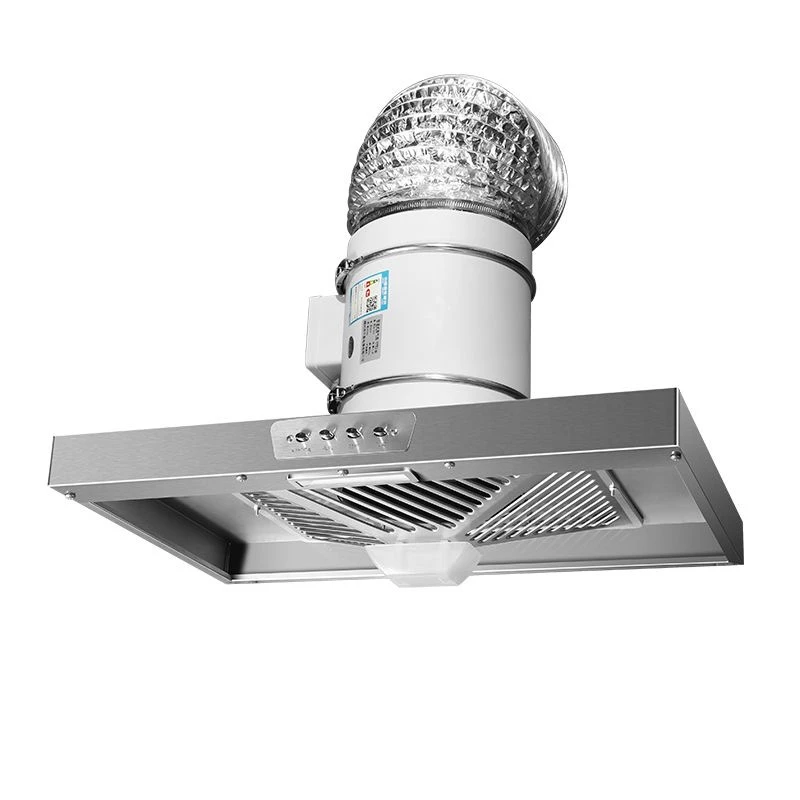
So that’s the lowdown—no fancy terms, no confusing specs, just what we’ve learned over years of talking to customers, installing hoods, and making sure people’s kitchens work the way they should. If you have any more questions, or you’re ready to find the right hood for your space, hit us up. We’re here to help.
Feed Shredder REFERENCES
- Air Change Rates for Kitchen Hoods, ASHRAE Standard 62.2-2022, Ventilation for Acceptable Indoor Air Quality
- Commercial Kitchen Ventilation Design Guidelines, International Mechanical Code (IMC) 2021
- "CFM Calculations for Residential and Commercial Kitchen Hoods", Home Ventilating Institute (HVI) Technical Bulletin 915
Jiaxing Zenterest Import & Export Co., Ltd.
With abundant experience, we are one of the most professional simple stainless steel kitchen hood manufacturers and suppliers in China. Please feel free to wholesale high quality simple stainless steel kitchen hood made in China here from our factory. We also accept customized orders.
Address: Room 101-3, Building 46, Zhifu Center, Gaozhao Subdistrict, Xiuzhou District, Jiaxing City, Zhejiang Province, P.R.China
E-mail: bonnie.wu@zenterestvent.com
WebSite: https://www.zenterestvent.com/
