Swivel points, also known as pivot points or articulation points, are mechanical components that allow for rotational movement around a fixed axis. These points are crucial in various industries and research fields due to their unique ability to provide flexibility and mobility in structures and systems. As a leading supplier of swivel points, I have witnessed firsthand the diverse range of research applications that these components offer. In this blog post, I will explore some of the key research applications of swivel points and discuss how they contribute to advancements in different areas of study. Swivel Point

Robotics and Automation
One of the most prominent research applications of swivel points is in the field of robotics and automation. Robots are designed to perform a wide range of tasks, from simple repetitive actions to complex maneuvers. Swivel points play a vital role in enabling robots to move with precision and flexibility. By incorporating swivel points into the joints of robotic arms, researchers can create robots that can mimic human-like movements. This is particularly important in applications such as surgical robotics, where precise and delicate movements are required.
In addition to robotic arms, swivel points are also used in mobile robots. These robots need to be able to navigate through different environments and perform tasks such as exploration, surveillance, and delivery. Swivel points allow the wheels or tracks of mobile robots to rotate, enabling them to change direction and move smoothly over uneven terrain. This enhances the mobility and versatility of mobile robots, making them more effective in various research and real-world applications.
Aerospace Engineering
The aerospace industry relies heavily on swivel points for a variety of applications. In aircraft design, swivel points are used in control surfaces such as ailerons, elevators, and rudders. These control surfaces are crucial for maneuvering the aircraft during flight. By using swivel points, engineers can ensure that the control surfaces can rotate freely and respond accurately to the pilot’s commands. This improves the stability and controllability of the aircraft, making it safer and more efficient.
Swivel points are also used in the deployment of aircraft landing gear. The landing gear needs to be able to extend and retract smoothly during takeoff and landing. Swivel points allow the landing gear to pivot, enabling it to adjust to different angles and positions. This ensures that the aircraft can land safely and securely on the runway.
In the field of space exploration, swivel points are used in satellite systems. Satellites need to be able to adjust their orientation and position in space to perform various tasks such as communication, Earth observation, and scientific research. Swivel points allow the satellite’s solar panels, antennas, and other components to rotate, enabling them to capture sunlight, communicate with Earth, and collect data. This enhances the functionality and performance of satellites, making them more effective in space missions.
Biomedical Research
Swivel points have significant applications in biomedical research, particularly in the development of prosthetic devices and assistive technologies. For individuals with limb amputations, prosthetic limbs can provide a means of regaining mobility and independence. Swivel points are used in the joints of prosthetic limbs to allow for natural and fluid movement. By mimicking the movement of human joints, swivel points can improve the comfort and functionality of prosthetic limbs, making them more user-friendly.
In addition to prosthetic limbs, swivel points are also used in assistive devices such as wheelchairs and exoskeletons. These devices are designed to help individuals with mobility impairments move around more easily. Swivel points allow the wheels or joints of these devices to rotate, enabling them to navigate through different environments and perform various tasks. This enhances the quality of life for individuals with mobility impairments and helps them to participate more fully in society.
Material Science and Engineering
Swivel points are also used in material science and engineering research. In the study of materials, researchers often need to test the mechanical properties of materials under different conditions. Swivel points can be used to create test fixtures that allow for the rotation and movement of specimens. This enables researchers to simulate real-world conditions and evaluate the performance of materials more accurately.
In addition to testing, swivel points are also used in the manufacturing of materials. For example, in the production of composite materials, swivel points can be used to control the orientation and alignment of fibers. This ensures that the composite materials have the desired mechanical properties and performance characteristics.
Environmental Science
Swivel points have applications in environmental science research, particularly in the study of fluid dynamics and oceanography. In fluid dynamics, swivel points can be used to create models and experiments that simulate the flow of fluids. By using swivel points, researchers can control the movement and rotation of objects in the fluid, allowing them to study the effects of different factors such as velocity, pressure, and viscosity.
In oceanography, swivel points are used in the design of buoys and other oceanographic instruments. These instruments need to be able to float on the surface of the ocean and move with the currents. Swivel points allow the buoys and instruments to rotate, enabling them to maintain their orientation and position in the water. This ensures that the data collected by these instruments is accurate and reliable.
Conclusion
As a supplier of swivel points, I am proud to be a part of the many research applications that these components enable. From robotics and aerospace engineering to biomedical research and environmental science, swivel points play a crucial role in advancing our understanding of the world and developing innovative solutions to complex problems.
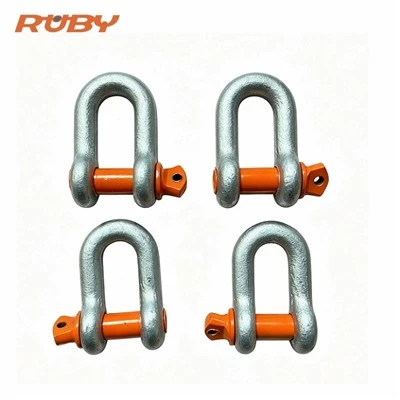
If you are involved in research or development in any of these fields and are looking for high-quality swivel points, I encourage you to reach out. Our team of experts can provide you with the technical support and guidance you need to select the right swivel points for your application. We offer a wide range of swivel points in different sizes, materials, and configurations to meet your specific requirements.
Chain Sling Contact us today to discuss your project and explore how our swivel points can contribute to your research and development efforts.
References
- Robotics: Science and Systems. (2023). Retrieved from the official conference website.
- Aerospace Engineering Journal. (2023). Various issues covering aircraft design and space exploration.
- Biomedical Engineering Research. (2023). Articles on prosthetics and assistive technologies.
- Material Science and Engineering Transactions. (2023). Papers on material testing and manufacturing.
- Environmental Science Research Journal. (2023). Studies on fluid dynamics and oceanography.
Hangzhou Ruby Imp. & Exp. Co., Ltd.
As one of the most experienced swivel point manufacturers and suppliers in China, we offer a wide range of products with superior quality. We warmly welcome you to wholesale custom made swivel point at competitive price from our factory.
Address: Taoyuan Industrial Park, Puyang Town, Xiaoshan, Hangzhou, Zhejiang, China.
E-mail: Sales5@z2lifting.com
WebSite: https://www.rubylifting.com/
