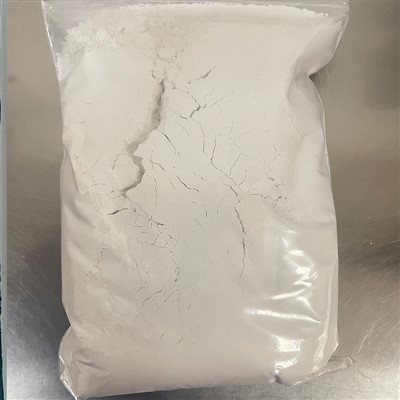
Calcium carbonate powder is a versatile and widely used industrial mineral product with a broad range of applications across various sectors. As a supplier of high – quality calcium carbonate powder, I often get asked about its sources. In this blog post, I will delve into the different sources of calcium carbonate powder, highlighting their characteristics and how they contribute to the quality of the final product. Calcium Carbonate Powder
1. Natural Mineral Sources
1.1 Limestone
Limestone is one of the most common and abundant sources of calcium carbonate. It is a sedimentary rock primarily composed of calcite, which is a crystalline form of calcium carbonate ((CaCO_{3})). Limestone is formed over millions of years from the accumulation of shells, coral, and other marine organisms.
The purity of limestone can vary significantly depending on its geological origin. High – purity limestone deposits, which contain over 95% calcium carbonate, are highly sought after for industrial applications. These high – purity limestones are often used in the production of high – grade calcium carbonate powders for the paper, paint, and plastics industries.
The extraction of calcium carbonate from limestone typically involves quarrying. Once the limestone is mined, it is crushed and ground into a fine powder. Different grinding techniques can be employed to achieve various particle sizes, which are crucial for different applications. For example, in the paper industry, a very fine – particle calcium carbonate powder is required to improve the paper’s brightness and smoothness.
1.2 Marble
Marble is another important source of calcium carbonate. It is a metamorphic rock that forms when limestone is subjected to high pressure and heat within the Earth’s crust. This process recrystallizes the calcite in the limestone, resulting in a more dense and homogeneous material.
Marble is known for its high purity and aesthetic appeal, which makes it popular in the construction industry for building facades, countertops, and sculptures. As a source of calcium carbonate powder, marble offers several advantages. Its high purity ensures that the resulting powder has excellent whiteness and chemical stability. This makes marble – derived calcium carbonate powder ideal for applications where color and purity are critical, such as in the production of high – end paints, coatings, and plastics.
However, the extraction and processing of marble can be more expensive compared to limestone. Marble quarries often require more advanced extraction techniques, and the processing to produce fine – powder grades can be more energy – intensive.
1.3 Chalk
Chalk is a soft, white, porous sedimentary rock that is also rich in calcium carbonate. It is formed from the microscopic remains of marine algae and foraminifera that have accumulated on the ocean floor over long periods of time.
Chalk has unique properties that make it suitable for certain applications. Its softness and fine – grained nature make it easy to grind into a very fine powder. Chalk – derived calcium carbonate powder is commonly used in the food and pharmaceutical industries. In the food industry, it can be used as a calcium supplement, an anti – caking agent, or a filler in various products. In the pharmaceutical industry, it is used as an excipient in tablets and capsules.
2. Synthetic Sources
2.1 Precipitated Calcium Carbonate (PCC)
Precipitated calcium carbonate is a synthetic form of calcium carbonate produced through a chemical precipitation process. It is made by reacting calcium hydroxide ((Ca(OH)_2)) with carbon dioxide ((CO_2)).
The production of PCC offers several advantages over natural sources. One of the main benefits is the ability to control the particle size and shape of the calcium carbonate powder precisely. This allows for the production of powders with specific characteristics tailored to different applications. For example, in the rubber industry, PCC with a specific particle size and surface area can improve the mechanical properties of rubber products, such as tensile strength and abrasion resistance.
PCC is also known for its high purity. Since it is produced through a chemical process, impurities can be minimized, resulting in a very clean and consistent product. This makes PCC suitable for applications where high purity is required, such as in the electronics and cosmetics industries.
The production process of PCC involves several steps. First, limestone is calcined to produce quicklime ((CaO)). The quicklime is then slaked with water to form calcium hydroxide ((Ca(OH)_2)). Carbon dioxide is then bubbled through the calcium hydroxide solution, causing calcium carbonate to precipitate out. The precipitated calcium carbonate is then filtered, washed, and dried to obtain the final powder product.
3. Industrial By – products
3.1 Steelmaking Slag
Steelmaking slag is a by – product of the steelmaking process. It contains a significant amount of calcium carbonate, along with other minerals and compounds. As the demand for more sustainable and environmentally friendly sources of raw materials increases, the use of steelmaking slag as a source of calcium carbonate powder has gained attention.
By processing steelmaking slag, calcium carbonate powder can be recovered. This not only reduces the amount of waste generated by the steel industry but also provides a valuable raw material for other industries. However, the quality of calcium carbonate powder derived from steelmaking slag can be variable, and it may require additional processing steps to remove impurities and achieve the desired particle size and purity.
3.2 Desulfurization Gypsum
Desulfurization gypsum is a by – product of the flue gas desulfurization (FGD) process used in coal – fired power plants. The FGD process is designed to remove sulfur dioxide ((SO_2)) from the flue gas, and in the process, calcium carbonate is used as a sorbent. The reaction between calcium carbonate and sulfur dioxide produces gypsum ((CaSO_4\cdot2H_2O)). Some of the unreacted calcium carbonate can be recovered from the desulfurization gypsum and processed into calcium carbonate powder.
This recycling of calcium carbonate from desulfurization gypsum is an environmentally friendly approach that reduces the consumption of natural resources. However, similar to steelmaking slag, the quality control of calcium carbonate powder from desulfurization gypsum can be challenging, and it may need to undergo purification and grinding processes to meet the requirements of different applications.
4. The Importance of Source Selection
As a calcium carbonate powder supplier, the selection of the source is crucial for ensuring the quality of our products. Different sources have different characteristics in terms of purity, particle size, and whiteness, which directly affect the performance of the calcium carbonate powder in various applications.
For applications where high purity is essential, such as in the food or pharmaceutical industries, we often choose high – purity natural sources like marble or produce synthetic PCC. For less – demanding applications, such as in some construction materials, limestone or industrial by – products may be more cost – effective options.
We also pay close attention to the sustainability of our sources. By using industrial by – products and recycled materials, we can contribute to reducing the environmental impact of our production process. At the same time, we ensure that all our sourcing and production processes comply with relevant environmental and safety regulations.
Contact Us for Purchase and Negotiation

If you are in the market for high – quality calcium carbonate powder, we are here to serve you. With our in – depth knowledge of different calcium carbonate sources and advanced processing technologies, we can provide you with customized solutions that meet your specific requirements. Whether you need a fine – particle powder for the paper industry or a high – purity powder for the pharmaceutical sector, we have the expertise and resources to fulfill your needs.
Calcium Carbonate Powder For more information on our products or to initiate a purchase negotiation, please feel free to reach out to us. We look forward to establishing a long – term and mutually beneficial partnership with you.
References
- Deer, W. A., Howie, R. A., & Zussman, J. (1992). Rock – forming minerals: Volume 4 Non – silicates excluding carbonates. Longman Scientific & Technical.
- Van Kooten, C., & Smit, E. (2000). Production and properties of precipitated calcium carbonate—a review. Adv. Colloid Interface Sci., 85(1 – 3), 1- 3.
- Pirajno, F. (2009). Igneous and Metamorphic Petrology. Springer.
Chaohu Jirun Energy Conservation and Environmental Protection Technology Co., Ltd.
We’re well-known as one of the leading calcium carbonate powder manufacturers and suppliers in China, also support customized service. Welcome to wholesale high quality calcium carbonate powder in stock here from our factory. If you have any enquiry about pricelist, please feel free to email us.
Address: No. 9, north of the intersection of Weihai Road and Weili Avenue, within the industrial park of Yinping Town, Chaohu City, Hefei City, Anhui Province.
E-mail: 13305654485@163.com
WebSite: https://www.chaohujirun.com/
