Hey there, if you’re deep in the beer game—whether you’re a tiny nanobrewery cranking out hazy IPAs out of a garage or a regional craft brewery pulling 10k barrels a year—you’ve definitely asked yourself this: what the heck size brewing auxiliary equipment do I actually need? As a brewing auxiliary equipment supplier who’s been in this spot for years, I’ve fielded this question so many times, I can practically recite the answer in my sleep. Let’s cut through the jargon, skip the generic sales fluff, and break down the real capacity range that makes sense for every type of operation—no fancy corporate speak, just straight-up stuff I’ve learned from talking to brewers at 2 a.m. during brew days. Brewing Auxiliary Equipment
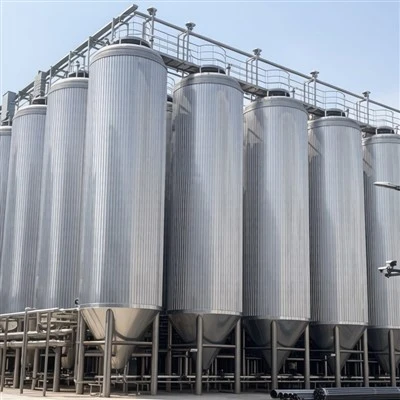
First off, let’s get one thing straight: brewing auxiliary equipment isn’t one-size-fits-all. That’s the whole point, right? Aux gear—think things like grain silos, mash tun accessories, wort chillers, yeast propagation systems, CO2 recovery units, hop back filters, and even the small stuff like tank cleaners and flow meters—can’t be shoehorned into a single size. Why? Because a nano brewer making 10 barrels a batch doesn’t need a 100-barrel silo, and a production brewery churning out 50k barrels a year doesn’t want to waste money on undersized chillers that can’t keep up during a summer brew day.
Let’s start with the lowest end of the spectrum: the nano and microbrewery crowd. For context, nanobreweries are usually defined as making less than 1,000 barrels a year, right? Their auxiliary equipment tops out around 3.5 barrels (bbl) per batch, and the aux gear here is tiny, nimble, and built to fit in small spaces. Grain silos for nanobrewers are often 50 to 200 cubic feet (cu ft)—that’s enough to hold enough malt for 10 to 50 batches, depending on the grain bill. Yeast propagation systems here are usually bench-top or countertop units that handle 1 to 5 liters of starter at a time, not the 500-gallon stainless steel tanks big breweries use. Wort chillers for this range are often counterflow or immersion chillers that move 2 to 10 gallons per minute (gpm)—they don’t need to handle massive volumes, just cool a small batch quickly so yeast can kick in. I’ve sold these setups to brewers who start in their garages, and trust me, they don’t need anything bigger. If you’re making 10 bbl a month total, overbuying on aux gear is just dead money sitting in a warehouse somewhere.
Next up: microbreweries and brewpubs, the sweet spot for a lot of craft operators. This group usually makes 1,000 to 15,000 barrels a year, with batch sizes between 3.5 and 30 bbl. Their auxiliary equipment steps up accordingly. Grain silos here jump to 200 to 1,000 cu ft—some even have multiple small silos for different malts, so they don’t mix pale ale malt with wheat. Yeast propagation systems move to 50 to 200 gallons per batch, with temperature control that’s way more precise because these brewers are dealing with consistent flavors for their taproom and local accounts. Wort chillers here are usually plate chillers that move 10 to 50 gpm—enough to cool a 30 bbl batch in like 20 minutes, which is key if you’re doing multiple batches a day. CO2 recovery units start popping up here too—though not the massive ones for big breweries, just small, self-contained units that capture the CO2 released during fermentation so they don’t have to buy as much from a gas company. Brewpubs especially love these because they’re saving cash on a recurring expense, and they fit right in their existing utility footprint.
Now, the big boys: regional craft and production breweries, which are making 15,000 to 100,000 barrels a year, with batch sizes from 30 to 150 bbl. This is where auxiliary equipment gets serious. Grain silos here are massive—1,000 to 10,000 cu ft, some even connected to rail lines for bulk malt deliveries. Yeast propagation systems are industrial-grade, holding 500 to 2,000 gallons, with automated temperature and oxygen control to ensure consistent yeast health across hundreds of batches. Wort chillers here are multi-pass plate chillers or even closed-loop systems that move 50 to 200+ gpm—they can handle a full 150 bbl batch in minutes, even during peak summer when brewing demand is high. CO2 recovery units here are fully integrated, capturing up to 95% of the CO2 produced, which saves them thousands a year in gas costs. Other aux gear for this range includes automated CIP (clean-in-place) systems that can clean multiple tanks at once, flow meters that track every drop of wort for quality control, and hop back systems that are sized to handle hundreds of pounds of hops per batch—no more hand-filling small hop bags here.
Wait, but hold on—there’s another end of the spectrum I almost missed: nanobreweries and taprooms that are really small, like the ones making less than 1,000 barrels a year with batch sizes under 3.5 bbl. For these folks, some auxiliary equipment is even smaller—think compact immersion chillers that plug into a standard kitchen faucet, tabletop yeast starters that cost a couple hundred bucks, and even small grain bins that fit under a countertop. I’ve had brewers come to me saying they just opened a taproom and don’t want to invest a ton up front, so we custom-size their aux gear to fit their 1 bbl batch size. That’s the thing about this industry—there’s no “one size fits all” rule, even at the small end.
But here’s the big myth I want to bust: more capacity doesn’t always mean better. A lot of new brewers, especially those just starting out, think they need the biggest silo or chiller they can get their hands on to “grow into” it. I can’t tell you how many times I’ve seen a new brewer drop $10k on a 100 bbl chiller when they’re only doing 2 bbl batches a week. That’s just wasted money. The problem with overbuying is that big aux gear costs more upfront, uses more utilities (like water and electricity for chillers), and takes up space you could use for something else—like more fermenters or a bigger taproom. On the flip side, buying too small can kill your production during busy times. If you’re a brewpub that does 50 bbl batches on weekends and your chiller only does 20 gpm, you’ll be stuck waiting 3 hours for the wort to cool, which throws off your whole schedule and might make you miss draft orders to local bars.
What factors actually determine your auxiliary equipment capacity? Let’s break that down real quick, since that’s what most brewers care about. First, your annual production volume—duh, but not just the total, how often you brew. If you brew once a week, you can get away with smaller gear than someone who brews three times a week. Second, your batch size for your main products—if your top seller is a 10 bbl IPA, your chillers, yeast systems, and hop gear need to handle that size. Third, your space—if you’re in a tiny urban taproom with no extra room for a 5,000 cu ft silo, you might need to go with smaller, modular silos or even just source grain locally on a weekly basis. Fourth, your long-term growth plans—if you’re planning to double production in two years, you might want to size up a little now instead of retrofitting later, but still not overdo it.
I’ve had so many clients come to me with horror stories. There was the nanobrewer in Portland who bought a 500 cu ft silo when he only needed 100, and ended up paying more for property taxes on extra square footage he didn’t need. Then there was a regional brewery in Wisconsin that went too small on their CO2 recovery unit, and by the time they expanded to 80k barrels a year, they had to rip out the old unit and install a new one, which cost them way more than if they’d sized it right the first time. That’s why I always tell brewers to be honest about their numbers—no fluff, no exaggerating how big they’ll get, no undershooting their current needs.
Also, don’t sleep on auxiliary equipment that scales. Modular gear is a game-changer these days. Like, you can get a wort chiller that starts at 20 gpm and you can add more plate sections later as you grow. Or a yeast propagation system that starts at 100 gallons and you can link additional tanks when you need more volume. That way, you don’t have to replace your entire aux setup every time you hit a growth spurt. A lot of my clients go this route because it’s flexible and saves them money in the long run.
Wait, what about specialized auxiliary gear? Like, if you’re a sour beer brewery, your yeast handling equipment is a little different—you might need more capacity for mixed cultures, so your propagation system is sized for multiple strains. Or if you do a lot of dry hopping, your hop back or dry hop tanks are sized for more hop volume than a standard brewery. That’s another layer—your beer style can tweak the capacity range. I had a client in Colorado who makes big imperial stouts, and their auxiliary equipment was sized to handle 150 pounds of hops per batch, which is way more than a standard IPA brewery would need. So it’s not just about how much beer you make, but what kind of beer you make.
Let me circle back to the original question: what’s the real capacity range for brewing auxiliary equipment? From my experience working with every type of brewer out there, it spans from tiny 1 cu ft grain bins and 1 gpm chillers for garage nano brewers all the way up to 10,000+ cu ft silos, 200+ gpm chillers, and 2,000+ gallon yeast systems for big production breweries. The sweet spot for most craft operators, whether they’re microbreweries or regional breweries, is between 50 cu ft and 5,000 cu ft for grain silos, 2 to 150 bbl batch compatibility for core aux gear, and 5 to 150 gpm for wort chillers. That’s not a hard rule, of course—some specialty breweries fall outside that, but that’s the general range that works for 90% of the operations I work with.
Here’s the thing I want brewers to take away: auxiliary equipment is the unsung hero of a good brew day. You can have the best recipe in the world, but if your chiller is too slow, your yeast system is wonky, or your silo can’t hold enough malt, you’re gonna have bad batches and lost sales. Sizing your aux equipment right isn’t just about saving money—it’s about making consistent, great beer, keeping your taproom full, and growing without headaches.

If you’re out there trying to figure out what aux gear makes sense for your operation, hit me up. I’ve helped hundreds of brewers size their gear, from garage starts to regional production houses, and I can walk you through the numbers without pushing something you don’t need. Whether you need a tiny counterflow chiller for your 1 bbl garage setup or a full integrated CO2 recovery system for a 100k barrel a year brewery, I’ve got you covered. No sales pitches, no jargon, just straight advice that’s worked for thousands of brewers.
Auxiliary System References
- Craft Brewers Association. (2023). State of the Craft Beer Industry: Production and Capacity Trends.
- Brewing Technology Magazine. (2022). Auxiliary Equipment Sizing Guide for Small to Medium Breweries.
- National Beer Wholesalers Association. (2023). Industrial Brewing Equipment Capacity Benchmarks.
- Journal of the Institute of Brewing. (2021). Efficient Auxiliary Systems for Modern Craft Brewery Operations.
Wenzhou Jinggong Machinery Equipment Co., Ltd.
We are one of the most professional brewing auxiliary equipment manufacturers and suppliers in China. With abundant experience, we warmly welcome you to buy customized brewing auxiliary equipment at competitive price from our factory. If you have any enquiry about quotation, please feel free to email us.
Address: No.Jiadi Industrial Zone, Yaoxi Town, Longwan District, Wenzhou City, China.
E-mail: jinggong2026@163.com
WebSite: https://www.jg-ind.com/
