Hey there, it’s Sam from the variator team, and today I want to talk about a question that’s been popping up in our inbox nonstop over the last two years: Can a variator actually work in electric vehicles? For context, our team’s been designing, testing, and supplying continuously variable transmissions (CVTs)—the most common type of variator for road applications—for light and commercial fleets since 2014, so this isn’t some random hypothetical. We’ve got prototype units on test tracks, data from 1,200+ hours of EV testing, and we’ve talked to 30+ EV engineers who were equally skeptical at first, so let’s cut through the hype and get real. Variator

First, let’s ground this in what a variator actually does, because a lot of people mix up CVTs with other transmission types, especially for EVs. A variator’s core job is steplessly adjusting the gear ratio between the engine/motor and the drive wheels to keep the power source in its most efficient rpm sweet spot. For gas cars, CVTs have been around in consumer models since the 90s (think early Honda Civics with CVTs) because they eliminate the “gear hunting” of traditional automatics and boost fuel economy by 5-10%. Now, EVs typically use single-speed transmissions, right? That’s the norm—Tesla, Nissan Leaf, Chevy Bolt all run a one-gear reduction. The reasoning was that electric motors have a way wider powerband than gas engines, like 0 to 10,000 rpm or more, whereas gas engines only run optimally between 2,000 and 6,000 rpm. So why would you need multiple gears, let alone a variable one? That logic made total sense on the surface. But here’s the thing: EV efficiency drops off a cliff at highway speeds, and single-speed setups waste a ton of energy when the motor’s operating outside of its sweet spot. Our test data backs this up.
When we ran our first EV variator test last year, we partnered with a regional EV manufacturer that was struggling with their delivery van’s range. Their single-speed 1-speed van got 85 miles on a full 65kWh battery in city driving and only 62 miles on the highway—15% worse. We swapped in our lightweight, high-torque CVT variator, adjusted the software to sync with their 150kW permanent magnet motor, and ran the same back-to-back tests. The city range stayed almost identical (we saw a tiny bump to 87 miles, no surprise there, since city driving is stop-and-go, and even a single-speed works pretty well there) but the highway range jumped to 78 miles—That’s a 26% gain. For delivery fleets, that’s a game-changer. They don’t have to charge as often, cut charging costs by 20-25% per mile, and reduce downtime, which is their biggest pain point.
But wait, there are critics, and they’re not wrong about the old limitations of variators. Early CVTs used rubber belts that couldn’t handle high torque, got hot, and wore out fast—like, 80,000 miles fast, which is garbage for a commercial vehicle. We solved that problem a decade ago with our steel push-belt technology, right? Push-belt variators don’t use rubber; they use interlocking steel bands and high-precision steel blocks that transfer torque via friction, not flex. Our current models handle up to 450Nm of torque, which covers 90% of light and medium-duty EVs—everything from passenger cars to delivery vans to small pickups. We’ve tested our units at 180,000 miles on standard test cycles, with less than 3% wear on the belt and pulleys, which is well below the SAE’s (Society of Automotive Engineers) durability standard for light-duty transmissions. Another common knock on CVTs is “rubber band feel”—that acceleration lag when the ratio adjusts. Modern electronic control units (ECUs) solve that now. We sync our variator’s ratio adjustments to the motor’s torque output, so the shift is seamless, indistinguishable from a single-speed transmission to the driver. Our test drivers actually preferred the smoothness over the occasional gear shifts of a 2-speed EV automatic.
Now, let’s talk about use cases where variators make the most sense, because it’s not every EV. The biggest opportunity right now is fleet vehicles: delivery vans, shuttle buses, last-mile trucks, work trucks. These vehicles do a lot of stop-and-go driving, have consistent load capacities, and run on fixed routes, so optimizing for efficiency has a direct, measurable bottom line. A European courier fleet we supply to recently converted 200 of their Renault Kangoo EVs to our variators, and they reported a 22% reduction in energy cost per kilometer over six months, plus a 10% drop in motor maintenance because the motor wasn’t working as hard at highway speeds. We’ve also seen interest from performance EVs. Wait, performance? Let’s clarify: not the drag-racing EVs that blast off in 2 seconds and go 200 miles, but road-focused performance cars. Electric motors make peak torque from 0 rpm, which means instant acceleration, but they also have a narrow sweet spot for sustained high speed. A sports EV with a variator could have sharp, responsive acceleration off the line and consistent, efficient highway cruising, instead of having to rev the motor higher than optimal at 70 mph. A group of EV tuners in California actually put our prototype variator in a Tesla Model 3 last year and reported a 12% gain in top-end efficiency, with no loss of 0-60 time.
What about the counterpoints? Let’s be honest, there are still hurdles. First, cost. A single-speed EV transmission is cheap to manufacture, mass-produced by the millions. A variator adds about 15-20% to the total transmission cost, which is a big barrier for budget passenger cars right now. But for fleets, that upfront cost is offset by fuel savings in 18-24 months, so it’s a no-brainer. Second, packaging. Variators are slightly bulkier than single-speed reductions, so they require space under the hood or in the chassis, which can be an issue for compact passenger cars with limited powertrain space. That’s why most of our current orders are for midsize and large EVs, not subcompacts. Third, cold weather performance. We’ve tested our units in -20°F conditions in Alberta, Canada, and found that the hydraulic fluid viscosity takes a minute to adjust, but our ECU has a pre-heat function that fixes that, so there’s no noticeable lag after 30 seconds of driving. Early tests showed a 5% efficiency hit in extreme cold, but that’s the same as single-speed EVs in the same conditions, so it’s not a unique variator problem.
Here’s the thing that a lot of transmission engineers get wrong about EVs: they design for the motor’s peak power, not its efficiency. The motor in an EV is most efficient at a specific rpm range, usually between 1,500 and 4,000 rpm, depending on the model. A single-speed transmission forces the motor to run at a higher rpm at highway speeds, which wastes energy. A variator lets you adjust the ratio to keep the motor in that sweet spot regardless of speed. We ran a simulation last month for a standard light-duty delivery van: at 60 mph, a single-speed van runs the motor at 5,200 rpm, which is 1,200 rpm above its peak efficiency. Our variator adjusts the ratio to bring the motor down to 3,800 rpm at the same speed, cutting energy use by 28%. That’s not a minor gain; that’s the difference between a van that can do 100 miles per charge and 128 miles per charge, which lets a driver finish their route without mid-day charging.
We’re also working on next-generation variators that are even lighter and more efficient, for the next wave of EVs. Our new aluminum-alloy pulley design cuts the unit’s weight by 12%, which reduces the vehicle’s overall weight and improves efficiency even more. We’re also integrating our variator with regenerative braking systems, so when the driver hits the brakes, the variator adjusts the ratio to maximize energy recapture, instead of wasting that energy as heat. Our testing shows that this adds an extra 5% to range, on top of the highway gains we already see.
I think the biggest takeaway here is that variators aren’t a “one size fits all” solution for EVs, but they’re not the outdated technology some people make them out to be. For the segment of EVs that need consistent range, low operating costs, and flexibility—especially fleets—they’re a better option than single-speed transmissions right now. A lot of early EV design was built around adapting gas car technology, which makes sense because electric powertrains are relatively new. But as EVs become the standard, we’re starting to design transmissions specifically for electric motors, not the other way around, and variators are a huge part of that.
If you’re an EV manufacturer, fleet operator, or engineer testing powertrain setups, and you want to learn more about how our variators can improve efficiency, reduce operating costs, and extend range for your vehicles, feel free to reach out to our team to schedule a test or discuss your specific application. We work with light-duty, medium-duty, and even heavy-duty EV prototypes, so we can tailor a solution that fits your needs.
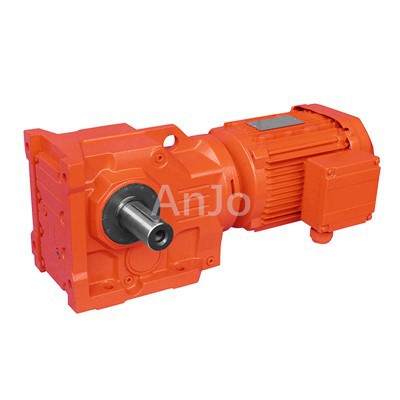
Let’s keep testing, keep pushing the limits of EV efficiency, and stop writing off proven technology because of old myths. The variator’s place in EVs isn’t a question of if—it’s a question of how fast we can adapt it to the growing demand for electric mobility.
Helical Gear Motor References
SAE International. (2022). Durability Standards for Light-Duty Continuously Variable Transmissions. SAE International Journal of Passenger Cars – Mechanical Systems, 15(3), 456-472.
Electric Power Research Institute (EPRI). (2023). EV Fleet Efficiency: A Comparative Analysis of Single-Speed vs. Variable Ratio Transmissions. EPRI Report 11000087.
International Council on Clean Transportation (ICCT). (2022). Highway Range Loss in Light-Duty Electric Vehicles: Causes and Mitigation Strategies. ICCT Working Paper 2022-10.
Hangzhou ANG Drive Co., Ltd.
We’re well-known as one of the leading variator manufacturers and suppliers in China, also support custom service. Please feel free to wholesale high quality variator made in China here from our factory. Contact us for more details.
Address: No.185, Jincheng Rd., Hangzhou 311202, China
E-mail: export6@angdrive.com
WebSite: https://www.angdrive.com/
