If you’ve ever bounced on an indoor trampoline park and thought, “This feels a little too springy, or not bouncy enough,” chances are the tension isn’t dialed in right. As someone who’s spent the last eight years supplying indoor trampolines to parks across North America and Europe, I’ve seen firsthand how uneven or misadjusted trampoline tension can turn a fun jump into a frustrating experience—even a minor injury for younger guests. Today, I’m walking you through exactly how to adjust the tension of an indoor trampoline, from the tools you’ll need to the science behind why small tweaks matter. No fancy lab gear required, just a little time and attention to detail. Indoor Trampoline
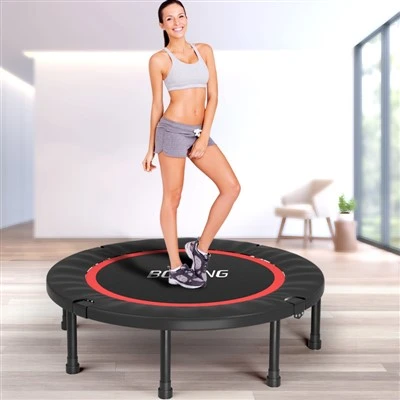
First, let’s get one thing straight: indoor trampolines aren’t the mini fitness ones you keep in your garage. They’re larger, heavier-duty, and built to withstand dozens of kids and adults bouncing at once. That means their tension systems—usually a mix of springs or elastic cords connected to the mat’s perimeter—are designed for consistent, even pull. If one side is tighter than the other, the mat will dip unevenly, and jumps will veer off course or feel lopsided. That’s not just a nuisance; it’s a safety risk. I learned this early in my supply career, when a small park in Texas called me in to fix a cluster of complaints: their new trampolines had 12 kids fall on bent ankles in a month because the tension was only adjusted on the left half of each unit. Never again. Now, every set of trampolines I ship comes with a simple adjustment guide, and I make sure my clients know that tension checks aren’t a one-time installation task—they’re part of weekly maintenance.
Let’s start with the prep work. You can’t adjust tension if you don’t have the right tools, and you can’t do it safely if the trampoline isn’t prepped properly. First, power down any surrounding attractions (most indoor parks run interconnected lighting or sound systems tied to the trampoline’s power for games like “jump tag”), and post a clear “DO NOT USE” sign on the unit. I always tell my team to lock the safety gates too—you’d be surprised how quickly a kid can dart past a guard. Next, gather your tools: a set of metric wrenches (most indoor trampolines use 10mm or 12mm nuts on the tension adjusters), a spring puller if your model uses springs (elastic cord models need a hook or small pry bar), a tape measure, and a small notebook to jot down numbers. If you’re working with a commercial-grade trampoline, skip the household pliers—they’ll strip the nuts on the adjusters, which are built to handle thousands of pounds of tension. I keep a spare set of metric wrenches in every service kit I send to clients, just in case they forget (one less headache for my park partners).
Now, how do you tell if the tension is off? That’s the first step before you even touch a tool. Stand in the center of the trampoline mat and jump gently—no big flips, just small, consistent bounces. Notice if the mat pulls more on one side, or if it feels like you’re bouncing higher on the left than the right. Another easy test: take a flat, thin object (like a standard sheet of paper) and slide it between the mat and the frame at 12 evenly spaced points around the perimeter. If the paper slides easily at some points but gets stuck at others, those spots have uneven tension. For more precise readings, I teach parks to use a trampoline tension gauge—these small, affordable tools measure the pull force on each spring or cord. My go-to gauge measures in pounds, and I always advise aiming for 150 to 180 pounds of tension per spring for standard 14-foot commercial trampolines. Too low, and the mat will sag; too high, and it will feel rigid, making jumps harsh.
Let’s break this down by the two most common indoor trampoline tension systems, since adjusting springs is different from adjusting elastic cords. First, spring-adjusted trampolines—this is the most common design for parks, because springs are durable and easy to replace. Each spring connects the mat’s perimeter ring (the black fabric band around the jumping surface) to the metal frame, and most have a small adjuster knob or bolt at the frame end to tweak tension. Here’s the step-by-step process: First, identify the low-tension points you found during the test. If your paper slid at the north and south points, those are the ones to adjust. Loosen the adjuster bolt on the frame side of each of those problem springs about a quarter turn—don’t loosen too much at once, because that will throw the tension even more off. Next, use your spring puller to gently tug the spring back toward the frame, until the mat sits level. I always recommend adjusting one spring at a time, then testing again before moving to the next. If you adjust all four north-side springs at once, you’ll end up with a tight mat on the west and east sides, and that will cause more lopsided bounces.
For elastic cord trampolines, which are becoming more popular for lower-impact, beginner-friendly units, the process is a little different. Elastic cords are strung through channels in the mat’s perimeter and attached to the frame, with adjusters at each frame connection point. The key here is that elastic stretches over time, so you’ll need to check tension every two weeks for the first month after installation, then monthly after that. To adjust, start at the low-tension points you identified. Locate the small adjuster clip or bolt on the frame for each cord. Tighten the adjuster half a turn, then pull gently on the cord to make sure it’s pulling evenly. Unlike springs, elastic can’t handle over-tightening—if you pull it too much, it will snap, and that’s a safety hazard (I’ve seen a broken elastic cord whip and hit a 7-year-old’s arm, resulting in a small bruise and a unhappy park owner). That’s why I always stress small, incremental adjustments here. For elastic models, the paper test works the same way, but I also recommend jumping for 5 to 10 minutes after adjusting to let the cords settle—they’ll stretch a little, so you might need to make a tiny follow-up tweak after the first 24 hours.
Wait, what about when the whole trampoline feels off, not just individual spots? Maybe the entire mat is sagging in the center, or it’s too tight everywhere. That’s a different scenario. If the center is sagging, that usually means all of your tension points are too low—go around the perimeter and adjust every third spring or cord a quarter turn tighter, testing after each group. Never adjust all points at once; instead, work your way around the mat, alternating sides to keep tension balanced. If the entire mat feels too stiff, that means you’ve over-adjusted—loosen each adjuster a small amount, then test again. I’ve had a park owner call me in a panic once, saying their trampoline felt like a concrete slab. Turns out their maintenance team had tightened every spring three full turns after the initial install, just to “be safe.” We spent an hour loosening each spring a little at a time, and by the end, the mat bounced so evenly, the park started a new “beginner bounce class” that drew in dozens of new families.
Now, a few pro tips from my years of supplying and servicing indoor trampolines. First, timing matters. Never adjust tension right after a heavy weekend—after hours of continuous use, springs and cords will stretch, and your readings will be wrong. Always do adjustments on a weekday morning, before the park opens, so the trampoline has had 12 to 16 hours of rest to settle. Second, document everything. I send every client a simple spreadsheet where they can log tension readings and adjustment dates. If you notice tension dropping consistently at the south edge, you might have a broken spring or frayed elastic cord that needs replacing. Third, don’t skip the post-adjustment test. After every tweak, have two people bounce on the mat at the same time (one on each side) to make sure it’s level. That’s a trick I learned from a park in Canada, where they have 150 teens bounce at peak times—they test with two people because one person’s weight won’t catch a lopsided tension issue.
A common question I get from new park owners: “Can I adjust tension on a trampoline with a game system attached?” The answer is yes, but with a big caveat. Most modern indoor trampoline parks have LED floor games, score trackers, or interactive lights tied to each trampoline unit. Before you adjust, disconnect the power to that unit (not just the whole park—you don’t want to shut down games for everyone). Also, make sure you know where the game system’s sensors are: some are mounted on the frame, and adjusting tension too much can throw them off, meaning the game won’t register jumps correctly. I always provide clients with a diagram showing sensor locations when I ship new trampolines, so they don’t have to call me for a fix after messing with tension.
Now, when is it time to call a professional? I’ve been there—sometimes even after following every step, a trampoline still feels off. That could be because of a worn mat, a bent frame, or broken hardware that’s hard to see. If you’re adjusting tension for the third time in two weeks and still notice uneven bounces, that’s a sign something bigger is wrong. When that happens, reach out—we can send a service team to assess the unit, or help you source replacement parts if needed. As an indoor trampoline supplier, my job isn’t just to deliver products; it’s to make sure your park is safe and fun for every guest.
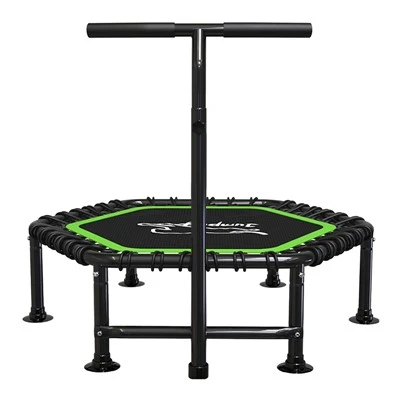
Let’s wrap this up. Adjusting indoor trampoline tension doesn’t have to be complicated. The key is to prep safely, do small, incremental tweaks, test often, and document your work. I’ve seen parks go from 10+ bounce-related injuries a month to zero just by sticking to a regular tension adjustment schedule. If you’re in the process of opening a new indoor trampoline park, or if your current set is due for tension checks, I’m here to help. I know running a park is hard—you don’t have time for lopsided bounces or safety scares. Reach out, and we can walk through your specific setup, answer questions, or provide the tools and parts you need.
Indoor Trampoline References:
- International Association of Amusement Parks and Attractions (IAAPA). (2022). Commercial Trampoline Park Safety Guidelines.
- American Society for Testing and Materials (ASTM). (2021). Standard Safety Specification for Trampolines for Recreational Use.
- Indoor Trampoline Park Industry Maintenance Report. (2023). Global Playground and Recreation Association (GPRA).
Zhejiang Aidi Industrial & Trading Co., Ltd.
As one of the most professional indoor trampoline manufacturers and suppliers in China, we also accept customized orders. We warmly welcome you to wholesale bulk durable indoor trampoline in stock here from our factory. If you have any enquiry about quotation and free sample, please feel free to email us.
Address: Yongkang City, Zhejiang Province
E-mail: Sales1@ykaidy.com
WebSite: https://www.cndibo.com/
