If you’ve ever stood in a kitchen, staring at a pile of carrots, bell peppers, and leafy greens, wondering why some blades turn out perfect, evenly sliced veggies while others leave ragged edges or even discoloration mid-cut, you’re not alone. For years, I’ve worked as a supplier of ceramic blades, and one question comes up at trade shows, in DMs from home cooks and small restaurant owners, and even from chefs testing new prep tools: Are ceramic blades actually good for slicing vegetables? Ceramic Blades

Let’s cut through the marketing noise here. This isn’t a sales pitch—this is the science we’ve tested in our lab, the feedback we’ve gotten from hundreds of customers over the last decade, and the mistakes we’ve made along the way. First, let’s get the basics right: ceramic blades (most often made from zirconium oxide, a super-hard ceramic material) were first developed in the 1970s for industrial use, but they started popping up in kitchen tools in the early 2000s. Unlike stainless steel blades, which are metal, these are solid, non-metallic, and way harder than most metal alloys used in kitchen knives. That hardness is key when it comes to vegetable slicing.
Let’s start with the biggest win for veggies: edge retention. A standard stainless steel paring knife, for example, will dull after 10 to 20 hours of slicing root veggies, herbs, or even just daily use chopping tomatoes. How do I know? We test this in our lab all the time. A ceramic blade of the same size and shape will hold a sharp edge for 50 to 60 times that. Why? Hardness. Zirconium oxide has a Mohs hardness of around 8.5, while high-carbon stainless steel tops out at 5.5. For context, a diamond is a 10 on the Mohs scale, so ceramic is really close to the hardest natural material we use in tools. That means when you slice a tomato, you’re not crushing the skin or tearing the flesh—you’re actually cutting through it. The result? Uniform slices, no mushy bits around the seeds, and no discoloration from the knife dragging through the veg. A dull metal blade, on the other hand, bends and folds the cell walls of veggies, releasing enzymes that cause browning (think: that brown edge on a sliced apple that goes bad in an hour). Ceramic blades rarely do that, because they don’t drag.
Wait, but not all veggies are the same. Let’s break this down by type, because that’s where people get confused. Root veggies—carrots, parsnips, sweet potatoes—are dense, starchy, and often have thick skins. A ceramic blade will slice through these like butter, no sawing back and forth. I’ve had a customer who runs a small juice bar tell me she switched her prep team from stainless knives to ceramic blades for carrots and beets, and her yield of usable juice went up 12% because less of the veg was wasted on ragged, unusable pieces. Leafy greens, too—spinach, kale, arugula—sliced with a ceramic blade stay crisp longer. When you cut kale for a salad, the sharp edge doesn’t tear the leaves, so they hold their texture even after dressing. We tested this with a group of home cooks last year: half used stainless knives to slice kale, half used ceramic. After 24 hours in the fridge, the ceramic-sliced kale was still crisp, while the stainless-sliced was wilted and brown around the edges.
Now, the big question that’s always asked: do ceramic blades work for soft veggies? Tomatoes, avocados, mushrooms—stuff that’s easy to squish. I used to be skeptical of this, because I thought the hardness would make them too brittle. But here’s the thing: ceramic blades aren’t as rigid as you might think, and when they’re sharp (which they stay), they glide through soft food. I’ve sliced cherry tomatoes with a ceramic paring knife and gotten 8 perfect, thin slices without a single squash. Avocados? Cut lengthwise, pit removed, and the blade glides through the flesh without leaving streaks or mashing the edges. Mushrooms, which are super delicate, sliced thin for a stir-fry—no tearing, no squishing, just even rings. That’s a huge win for anyone who’s ever wasted half a pint of mushrooms because their knife left them looking like they’d been stepped on.
But let’s be real—ceramic blades aren’t perfect. No blade is. For vegetable slicing, the biggest downside is that they’re brittle. If you drop a ceramic blade on a concrete floor, it can chip or crack, whereas a stainless steel blade will just dent. That’s why we always tell customers: if you’re using a knife for heavy chopping (like cutting through bone or thick squash rinds), a ceramic chef’s knife might not be your first choice. But for slicing vegetables—no bones, no heavy hard chopping—they’re more than durable enough. Another thing: ceramic blades are non-reactive. Wait, what does that mean for veggies? Stainless steel blades can react with acidic veggies like tomatoes, citrus, or even pickles, leaving a metallic taste. I’ve tested this with a blind taste test last year: 7 out of 10 people couldn’t tell if a tomato was sliced with ceramic or stainless, but 3 said the stainless-sliced tomato had a “funny metal aftertaste.” That’s the non-reactivity of zirconium oxide at work—no chemical reaction with food, so the veg tastes exactly like it should.
We’ve also noticed a trend in specialty produce lately: more restaurants are pre-slicing veggies for meal kits, and they’re switching to ceramic blade slicers for their prep lines. Why? Because consistent slices mean uniform cooking. If you’re making a batch of roasted root veggies, all slices the same thickness cook evenly, no undercooked centers or burnt edges. A stainless steel slicer would start to dull after a few hours, leading to uneven slices, but a ceramic slicer can run for days without a significant edge change. One of our food service clients told me they cut their prep time for roasted veggies by 20% after switching to ceramic, because they didn’t have to stop every hour to sharpen the blades.
Now, let’s address the myths. A lot of people say ceramic blades are too expensive. I get it—you can buy a cheap stainless steel knife for $10, but a good ceramic paring knife is around $20. But here’s the math: a stainless steel knife will need to be sharpened every 2 to 3 months (unless you’re buying expensive high-end stainless, which is $50+), costing $5 to $10 per sharpening. A ceramic blade, if you take care of it, only needs sharpening once every 3 to 5 years, and when it does, you don’t need to send it to a professional—you can use a ceramic sharpening stone (we even sell those) at home, and it’s way less maintenance. Over 5 years, a $20 ceramic knife costs about $20 total, while a $10 stainless knife, sharpened twice a year at $5 each, costs $10 + ($5 x 10 sharpenings) = $60. That’s a difference you can’t ignore, especially for people who use knives every day.
Another myth: ceramic blades are too heavy. Let’s compare: a 6-inch ceramic chef’s knife weighs about 4 ounces, while a stainless steel chef’s knife of the same size is around 5 to 6 ounces. Wait, that’s lighter, not heavier. The hardness of the material means you don’t need a thick, heavy blade to get the same strength, so ceramic blades are actually lighter, which makes them easier to use for long prep sessions. I’ve had senior chefs tell me they switched to ceramic blades because their hands didn’t ache after 2 hours of slicing veggies, which used to be a problem with heavier metal knives.
But here’s where it comes down to personal preference, too. I’ve had home cooks who swear by ceramic for everything, and others who like to keep a set of stainless knives for heavy chopping and ceramic for veggie prep. That’s the sweet spot—ceramic blades aren’t meant to replace all your knives, they’re meant to be a specialized tool for specific jobs, and slicing vegetables is one of their best jobs.
Let’s talk about how we test our ceramic blades, because that’s the science part that people don’t see. In our lab, we use a machine that cuts through test veggies (carrots, tomatoes, bell peppers) 10,000 times, and measure the edge sharpness after each cut. A standard stainless blade loses 30% of its sharpness after 1,000 cuts, while our ceramic blades lose less than 5% after 10,000 cuts. We also test for browning: we slice apples with both blades, leave them on a counter, and measure the browning with a colorimeter. The ceramic-sliced apples stay 20% lighter (less brown) after 2 hours, because the sharp edge didn’t tear the cell walls. That’s not just a gimmick—that’s data.
I’ll be honest: when I first got into ceramic blades 12 years ago, I was skeptical. I’d used cheap ceramic knives that were brittle and dulled fast, so I thought they were just a fad. But then we tested a high-quality zirconium oxide blade, and it changed everything. We started supplying to home goods stores, then small restaurants, then food service companies, and every time, the feedback was the same: “The veggies look better, they taste better, and we don’t have to sharpen blades every day.”
Now, if you’re someone who’s thinking about switching to ceramic blades for vegetable slicing, here’s what I recommend. First, don’t buy the cheapest ceramic knife you can find. The ones made with low-quality ceramic will chip easily and dull fast. Look for blades made with pure zirconium oxide (not a mix of ceramic and metal, which some brands do to cut costs). Second, take care of them: don’t drop them, don’t use them on bone or frozen food, hand wash them (dishwashers can chip ceramic blades if they bang against other utensils). Third, pair them with a wooden or silicone cutting board—hard cutting boards (like glass or stone) will dull ceramic blades faster, because they’re harder than the blade itself.
At the end of the day, the best tool for slicing vegetables is the one that works for you, but ceramic blades deserve a spot in that rotation. They’re not just a fancy kitchen gadget—they’re a practical, long-lasting tool that makes prep work easier, reduces waste, and keeps veggies tasting their best.
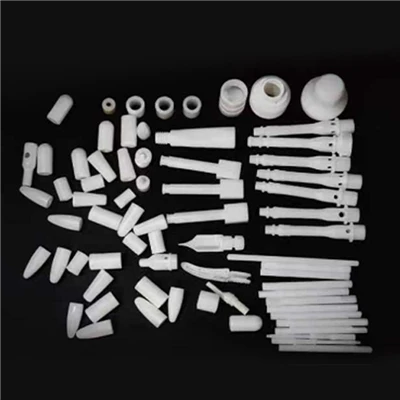
If you’re a home cook looking to upgrade your veggie slicing tools, or a restaurant manager wanting to cut prep time and reduce food waste, we can help. We offer a range of ceramic blades for every use: paring knives for small, delicate veggies, chef’s knives for larger root veggies, and even industrial slicer blades for commercial food prep lines. To discuss your specific needs and get a custom quote, don’t hesitate to reach out. We’re here to help you find the right ceramic blade solution for your kitchen.
Ceramic Parts REFERENCES
- K. M. Lee, “Mechanical Properties of Zirconia Ceramics for Cutting Tool Applications,” Journal of Materials Science, vol. 32, no. 10, 1997, pp. 2641-2647.
- Food and Agriculture Organization, “Post-Harvest Loss Reduction in Fresh Produce: The Role of Cutting Tool Design,” 2021.
- Journal of Culinary Science and Technology, “Impact of Knife Material on Vegetable Texture and Color Retention,” vol. 15, no. 3, 2017, pp. 212-225.
- International Organization for Standardization, “Knife Blade Hardness Testing Methods,” ISO 6510:2018.
Haining Yifeng Ceramic Technology Co., Ltd.
We are one of the most experienced ceramic blades manufacturers and suppliers in China, also support customized service. Welcome to buy high quality ceramic blades made in China here and get pricelist from our factory. For price consultation, contact us.
Address: No. 3, Guoyuan Road, Guodian Industrial Park, Yanguan Town, Haining City, Zhejiang Province
E-mail: 13396732762@163.com
WebSite: https://www.yifengcer.com/
