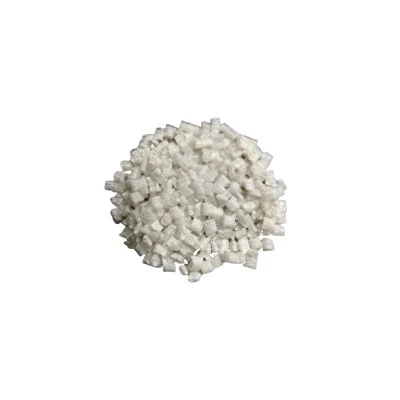
Hey everyone, let’s cut to the chase—if you’re in the energy space, odds are you’ve wondered: “Are plastics even useful for energy storage?” Because let’s be real, when we hear “energy storage,” we usually think lithium-ion batteries, big solar farms, or those massive grid batteries with metal parts. But here’s the thing: as a plastic compounds supplier, I’ve been deep in this space for years, and the answer is a resounding “hell yeah” — and it’s not just the cheap plastic water bottles you leave on your desk. We’re talking about high-performance plastic compounds that are basically the unsung heroes of every energy storage system out there. Plastic Compounds

Let’s start with the most obvious one: lithium-ion batteries, which power everything from your phone to electric vehicles (EVs) to grid-scale storage. When you crack open a Li-ion battery pack, you don’t see a bunch of plastic… but you’d be wrong. Most people miss the tiny, critical plastic parts inside that keep the battery from catching fire or falling apart after a thousand charges. Let’s break it down. First up: separators. That thin film between the anode and cathode that keeps them from touching and shorting out? Half of those separators are made from plastic compounds—usually polyolefins like polyethylene (PE) or polypropylene (PP). We make modified versions of these, too—add a little ceramic filler, tweak the molecular structure, and suddenly that separator is way more heat-resistant. Because if a battery gets too hot (hello, 2022 EV battery fires), a regular plastic separator can melt and cause a short. Our compounds fix that. We’re talking separators that can handle temps up to 160°C, way hotter than a standard Li-ion’s operating range. Without that, Li-ion tech would be way less safe—and way less scalable for EVs or grid storage.
Then there’s the battery casing. You used to see a lot of metal casings for big battery packs, but now almost every new EV uses plastic compound casings. Why? Metal is heavy, which kills range. Plastic is lightweight, which adds miles to an EV’s battery life. But not just any plastic—we make engineering-grade compounds that are super strong, flame-retardant, and corrosion-resistant. Grid-scale storage systems, which are like giant stacks of hundreds of battery modules, use these compounds too. Those big cabinets you see in solar farms? The outer shell, the internal brackets, the insulation? All plastic compounds. They’re way cheaper than metal, easier to mold into weird shapes, and don’t rust if they’re outside in the rain or snow. I’ve worked with solar companies that switched from metal to our compounds and cut their storage system weight by 30%—that’s a big deal when you’re moving hundreds of tons of batteries around for installation.
Wait, but it’s not just lithium-ion batteries. What about other energy storage tech, like flow batteries, supercapacitors, or even thermal storage (you know, storing heat or cold for later use)? Let’s talk flow batteries—they’re big for grid storage because they last way longer than Li-ion and don’t catch fire as easily. But flow batteries use liquid electrolytes, right? Those liquids can be super corrosive, like acidic or alkaline stuff that eats through metal. So what do you use to hold those electrolytes? You guessed it—plastic compounds. We make custom compounds that are chemical-resistant, so they don’t break down when exposed to those electrolytes for 10+ years. I had a client last year that builds flow batteries for wind farms; they used our compound for the internal tanks and saved 20% on materials compared to the metal alternatives, plus the tanks are way less likely to leak. That’s a win-win.
Supercapacitors, too—they’re the ones that charge super fast, used in things like bus rapid transit systems or power grids to smooth out energy spikes. The electrodes in supercapacitors need a separator too, same as Li-ion. And the casings? Again, plastic compounds. The only difference is we tweak the compound’s conductivity a little (add a tiny bit of carbon fiber, usually) to make it work with how supercapacitors move energy. It’s not a huge change, but it’s exactly what our team specializes in—modifying plastic compounds to fit specific energy storage needs, not just selling off-the-shelf pellets.
Let’s get into the “why this matters” stuff. The energy storage market is blowing up—research says it’ll be a $500 billion industry by 2030, mostly driven by EVs and renewable energy (solar and wind need storage when the sun doesn’t shine and wind doesn’t blow). To hit those goals, we can’t rely on just metal or lithium. Plastic compounds solve a lot of pain points: weight, cost, safety, durability. Take EV batteries again—every 10% reduction in battery pack weight adds about 5% more range, right? That’s a huge selling point for people worried about EV range anxiety. Our plastic casings don’t just cut weight—they also absorb vibration, which means less wear and tear on the battery cells, so the battery lasts longer. That’s less e-waste, too—win for sustainability.
Wait, but hold on—some people will say, “Plastic is bad for the environment, why use it for energy storage?” That’s a fair question, and we take it seriously. Let’s be clear: not all plastic is created equal. The old single-use plastics are terrible, but the high-performance plastic compounds we make are engineered for long life—10+ years, often 20. Plus, many of our compounds are recyclable, even post-consumer or post-industrial. We’ve got a line of recycled-content plastic compounds for battery casings that meet all the safety standards—no compromise on performance, just less new plastic. Some battery manufacturers are even testing our compounds to be recycled along with the battery packs at end of life. It’s a circular loop, not just a one-and-done use.
Let me give you a real example from my own work. A couple years back, we partnered with a mid-sized EV maker that was having issues with their battery packs failing in cold climates. The metal brackets they were using were brittle when temps dropped below -20°C, so they’d crack, loosen the cells, and cause shorting. We modified a PP compound with a little impact modifier and added some frost-resistant additives—suddenly, the brackets could handle -40°C, no cracking. Their failure rate dropped by 90% after they switched to our stuff. That’s the kind of thing that doesn’t make the news, but it’s the stuff that makes energy storage actually work, especially in extreme conditions.
Another one: grid-scale storage for a solar farm in Arizona. The desert is super hot, and regular plastic would break down from UV rays in a year or two. We make a UV-stabilized compound that’s designed to stand up to 10 years of Arizona sun. The farm’s manager told us later that they haven’t had to replace any of the casing parts in 5 years—something they were doing every 18 months with their old metal casings that corroded from the heat. That’s huge for maintenance costs, which is a big deal for grid operators with tight budgets.
Now, let’s talk about what’s next. The energy storage space is moving fast—solid-state batteries, which are the next big thing after Li-ion, rely even more on plastic compounds. Solid-state batteries use a solid electrolyte instead of a liquid, and the separators and casings need to handle higher voltages and temps than Li-ion. Our team is already testing modified polyimide compounds for solid-state separators—polyimide is super heat-resistant, way better than PP or PE. We’re also working on compounds that can act as both separator and electrolyte, cutting down on parts and making batteries even lighter. There’s also long-duration energy storage, like pumped hydro or compressed air? Wait, no, pumped hydro is mostly water, but the pipes and valves? Some are switching to plastic compounds because they don’t corrode, which reduces maintenance. It’s not just batteries—energy storage is a whole ecosystem, and we’re in every part.
I know a lot of people in the energy space don’t think about plastic suppliers when they’re planning a new storage project. That’s where we come in. A lot of suppliers just sell generic plastic pellets, but we work with energy storage companies to custom-formulate compounds for their specific needs. Whether you need a flame-retardant casing for a residential battery, a corrosion-resistant separator for flow batteries, or a UV-stabilized bracket for a grid farm, we can tweak the compound to fit.
If you’re reading this and you’re a battery manufacturer, EV maker, grid operator, or anyone involved in energy storage, don’t sleep on plastic compounds. They’re not just a side part—they’re a core component that makes your product safer, cheaper, longer-lasting. We’ve spent years figuring out how to tailor our compounds to the unique demands of energy storage, and we’re always updating our formulas as new tech comes out.
If you’re looking to upgrade your energy storage components, test a new material, or just chat through what you need for your next project, reach out to us. We don’t do one-size-fits-all, and we’re here to help you figure out the best plastic compound for your specific needs. No sales pitches, just straightforward talk about how we can make your energy storage work better.
Plastic Compounds References
- National Renewable Energy Laboratory (NREL). (2021). The Role of Advanced Materials in Grid-Scale Energy Storage.
- International Energy Agency (IEA). (2023). Electric Vehicle Battery Material Trends and Requirements.
- Journal of Power Sources. (2022). Polymer-Based Separator Modifications for High-Safety Lithium-Ion Batteries.
- U.S. Department of Energy (DOE). (2022). Flow Battery Material Cost and Performance Analysis.
Changshu Diyou New Material Technology Co., Ltd.
As one of the most professional plastic compounds manufacturers and suppliers in China, we also support customized service. We warmly welcome you to wholesale high-grade plastic compounds in stock here from our factory. If you have any enquiry about quotation, please feel free to email us.
Address: No. 58 Yagu Line, Xinyu Village, Shanghu Town, Changshu City, Suzhou City, Jiangsu Province
E-mail: 13862301520@163.com
WebSite: https://www.diyouplas.com/
