If you’re running a factory and looking to upgrade your metal cutting game, an automatic band saw is a total game-changer—no more slow manual cuts, no more tired workers, way less waste. But here’s the thing: slapping a new saw down on a random floor spot and plugging it in won’t cut it (pun totally intended, sorry not sorry). From my side as someone who sells these bad boys, I’ve seen way too many guys mess up the install because they skipped the small, important details, and that ends up costing them downtime, repairs, or even safety issues. So let’s break down exactly what you need to get right, no fancy jargon, just real talk from someone who’s on the factory floor talking to guys like you every week. Automatic Band Saw
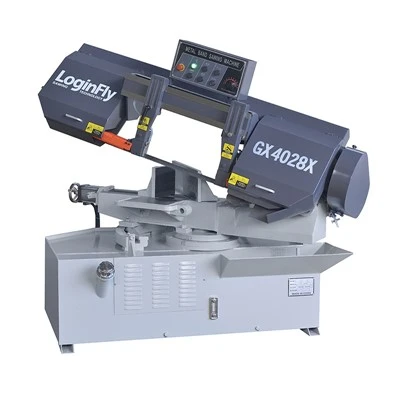
First up, let’s start with the basics you might not even think about: the saw itself is heavy. Like, really heavy. Automatic band saws aren’t those tiny tabletop things you use for woodworking in your garage—we’re talking 1,500 lbs, 2,500 lbs, even 4,000 lbs for the bigger industrial models. If your factory floor is made of that old, thin concrete from the 90s, that’s a problem. You need to figure out the load capacity of the floor first. I’ve had a customer a few months back who tried putting a 3,000 lb saw on a floor that only could handle 150 lbs per square foot—they ended up with cracks a week later, and had to jack up the whole floor to add support. Don’t be that guy. Most of our saw specs list the weight, and I always tell guys to get a structural engineer to check if their floor is up to snuff. If you’re on a budget, a quick rule of thumb is: for every 1,000 lbs of saw weight, you need at least 10 square feet of floor space under it, and the floor has to support at least that much total. Also, make sure the floor is flat, not sloped. A sloped saw will wobble while cutting, mess up the blade tension, and lead to crooked cuts or broken blades. Small wobbles from an unlevel base add up fast—trust me, I’ve seen blades snap right off because of a ½ inch slope.
Next, space. Not just how much the saw takes up on the floor, but the space around it. A lot of factory guys forget that the saw isn’t a standalone box—you need room to load materials, unload finished parts, and access the controls and maintenance points. Let’s be real: if you can’t reach the blade to change it, or a workpiece gets stuck and you can’t get to the emergency stop, that’s a safety hazard and a production killer. For the front of the saw (where you feed the material), you need at least twice the length of your longest workpiece. If you’re cutting 10 ft steel bars, you need 20 ft of open space in front to load them without cramping. Behind the saw, you need enough room for the chip conveyor (if your model has one) to slide out, and for the operator to step back if something goes wrong. I usually tell people 3 ft on the sides, 4 ft in front, 2 ft behind. Don’t overcrowd the area—we had a customer who stuffed his saw next to a stack of raw materials and a forklift aisle, and the forklift nicked the control panel within a month. That’s $2,000 in repairs he didn’t need.
Power is another big one, and it’s not just “plug it into a wall.” Automatic band saws use way more power than your average tool. Most industrial models run on 3-phase electricity, not the regular 1-phase you have in your house. If your factory only has 1-phase power, you’re gonna need a converter, and that’s not just a cheap plug-in box—get a heavy-duty one sized for your saw’s motor. If you mess up the power supply, the motor will burn out, and that’s a $3,000 part to replace. Also, check the voltage. Our standard models are 460V, but some smaller ones are 230V. Don’t guess—look at the saw’s spec sheet, or shoot me a text and I can send it over. Another thing: you need a dedicated circuit. No running a saw off the same circuit as your welding machines or air compressors. Those other machines draw power spikes that can trip the breaker or damage the saw’s electronics. I always suggest adding a surge protector too—factory power can be finicky, and surges from other equipment can fry the control board faster than a hot knife through butter.
Cooling and chips—yeah, I know, chips are messy, but you can’t ignore them. Band saws generate a ton of heat, both from the blade cutting and the motor running. If the blade gets too hot, it loses tension, dulls fast, or breaks. So you need a coolant system—most automatic saws come with a built-in coolant tank, but you need to make sure it’s connected right, and that the coolant is the right type for your material. If you’re cutting steel, use a water-based coolant with rust inhibitors; if it’s aluminum, use a synthetic coolant to avoid buildup. Don’t just fill it with tap water—tap water has minerals that clog the lines, and the coolant won’t cool the blade right. Also, the chips: all that metal shavings? They’re hot, slippery, and can cause fires if they pile up near electrical parts. That’s why almost every automatic saw has a chip conveyor—either a belt or a screw type. You need to make sure the conveyor is sloped right so the chips slide out to a bin, and that the bin is empty regularly. I’ve had a customer who let chips pile up so high that they got into the motor vents, and the motor overheated and shut down for 3 days. Cost him $10k in lost production. Also, keep the area around the saw clean—sweep up loose chips every shift, no exceptions.
Blade maintenance access—this is something I see overlooked all the time. Automatic band saw blades are expensive, right? A good blade can cost $150 to $500 depending on the size, and if you can’t get to it fast when it breaks, you’re down for hours. Make sure the saw’s blade changing area is easy to reach—no bolts you have to use a special tool for, no walls blocking the side where the blade is mounted. Also, you need a place to store extra blades, not just stacked in a corner where they can rust. We sell blade storage racks that mount right next to the saw, so you can grab one in 10 seconds when you need it. Another tip: mark your blade sizes on the storage so you don’t grab the wrong one for a job. I’ve seen guys put a 12-inch blade on a 10-inch saw—total disaster, blade snaps instantly.
Safety features—don’t skip on these, and make sure they’re properly installed. Most automatic saws come with emergency stop buttons, blade guards, and overload protection, but you need to test them before turning the saw on. The emergency stop should be within arm’s reach of the operator, not 10 ft away. Test it a few times to make sure it cuts power instantly. The blade guard should cover the part of the blade that’s not cutting, so no one’s hand can accidentally touch it while it’s running. Also, if you’re in a factory with other workers, add a warning sign around the saw, and maybe a light or a buzzer that goes off when the saw is running—so forklift drivers or other guys know to stay clear. I had a friend who works in a factory where a worker leaned in to grab a workpiece and touched a moving blade; he lost a finger, all because the guard was removed for “easier access.” Don’t do that. The guards are there for a reason.
Wait, let’s talk about alignment. When the saw is installed, you have to align it properly. The blade has to be straight, the vise that holds the workpiece has to be square, and the frame has to be level. If that’s off, every cut will be crooked, and your parts will be scrap. Most of our saws come with a level tool and alignment guides, but if you’re not handy with that, hire a technician to do it. It’s worth $200 to $300 to get it right, instead of wasting $1,000 in scrap parts. Also, after the first week of use, check the alignment again—sometimes heavy cutting can shift the frame a little, especially if the floor isn’t perfect.
Another thing: ventilation. Wait, no, not just general factory ventilation—local ventilation for the saw. When you’re cutting metal, especially steel or stainless, you get fumes and fine metal dust. If you’re cutting indoors without a proper exhaust, that dust builds up in the air, which is bad for your workers’ lungs and can be a fire hazard. Most automatic saws have a connection for a local exhaust hood—mount that right above the cutting area, and hook it up to your factory’s dust collection system. If you don’t have a dust system, even a cheap shop vac sized for metal dust will work. Just don’t skip that part; OSHA actually requires it for most industrial metal cutting, and I’ve had customers get cited because they didn’t have it.
Let’s circle back to my side as a supplier, because I’m not just here to sell you a saw—I’m here to make sure it works for you. A lot of guys try to cut corners on install to save money, but that usually ends up costing more in the long run. If you’re not sure about any of this stuff, just hit me up. I can walk you through checking the floor, the power, the space—even send a local tech to do a site check for free, no pressure. I’ve had customers who tried to install on their own and messed up, and by the time they called me, they had to fix the floor, replace a burnt motor, and lost a week of production. That’s way more than the cost of a site check or a little help.
Wait, one last thing: testing before full use. Once you get the saw installed, don’t crank it up and run 24/7. Run a test cut with a scrap piece of your material, check the cuts, make sure the blade is running smooth, check the coolant, check the chips. Run it for a hour or two, shut it down, check the motor temperature, check for any loose bolts. If something feels off during the test, fix it before you start producing actual parts. I had a customer who skipped the test, and the first production run had 50 bad parts because the vise was misaligned. That’s $5k in scrap right there.
At the end of the day, installing an automatic band saw isn’t rocket science, but it’s not just plug-and-play either. The big things are: get the floor and space right, make sure power is correct, handle coolant and chips properly, don’t skip safety, and test it before you use it. If you take the time to get those parts right, your saw will run for years, cut parts fast, and save you way more time and money than the install cost.

If you’re ready to talk about getting an automatic band saw for your factory, or just have questions about any of these requirements, don’t hesitate to reach out. I’m always here to help, no pressure, no sales pitch that’s too fancy. We can chat through your specific setup, figure out what you need, and make sure you get the install right the first time.
Conventional Circular Saw Machine References
- Occupational Safety and Health Administration. (2022). Guarding of power-driven machinery and equipment. OSHA 29 CFR 1910.212.
- Metalworking Cutters Association. (2021). Industrial band saw installation best practices and safety guidelines. MICA Technical Report 412.
- Concrete Reinforcing Steel Institute. (2020). Load capacity requirements for industrial machinery floors. CRSI Engineering Bulletin 18.
- Electrical Safety Foundation International. (2022. Industrial power supply requirements for heavy machinery. ESFI Technical Note 76.
- National Fire Protection Association. (2021). Standard for metalworking fluids and chip handling. NFPA 482.
Shanghai Loginfly Sawing Technology Co., Ltd.
As one of the most professional automatic band saw manufacturers and suppliers in China, our products have good reputation in the market. We warmly welcome you to wholesale premium automatic band saw from our factory. If you have any enquiry about cooperation, please feel free to email us.
Address: Room 506 NO.655 Yinxiang Road,Nanxiangtown,Jiading District, Shanghai.China
E-mail: sales01@loginfly.com
WebSite: https://www.loginflysaws.com/
